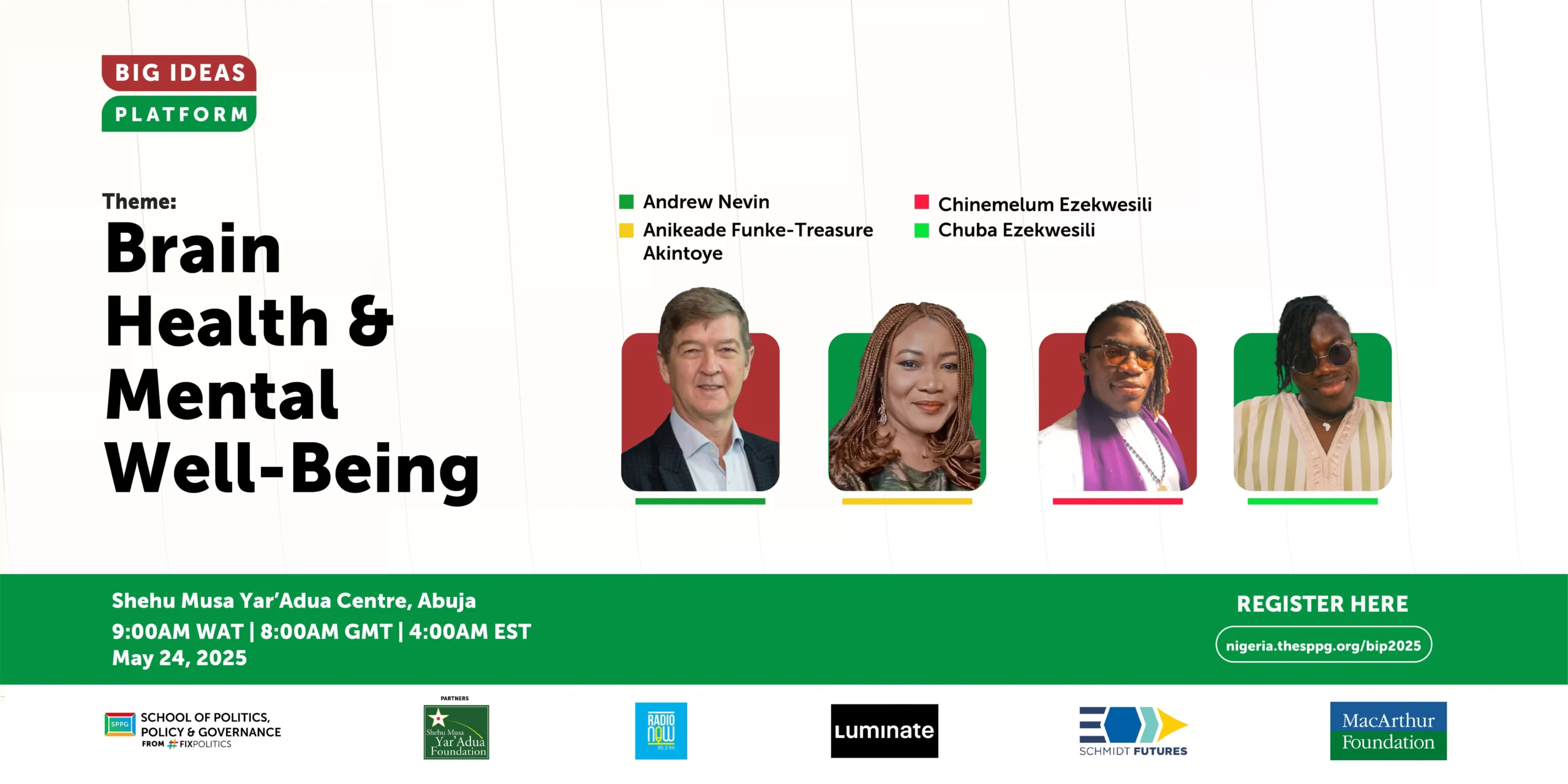
May 24, 2025 | In Big Ideas Post, Knowledge Hub, Op-Ed, Program & Events, Updates
For millions of women and girls across Nigeria, menstruation is not simply a biological process. It is an experience shaped by silence, stigma, and limited support systems.
And that silence has consequences.
In many communities, conversations about menstrual health remain restricted, leaving young girls without the information or resources they need to manage their health with dignity. The result is visible in classrooms, where students miss school days each month, and in workplaces, where women navigate discomfort and reduced productivity without acknowledgement or accommodation.
These challenges are often framed as social or cultural issues. In reality, they are deeply connected to mental well-being and human capital development.
When a girl consistently misses school due to lack of menstrual support, the impact extends beyond lost learning time. It affects confidence, participation, and long-term opportunity. Over time, these disruptions accumulate, shaping educational and economic outcomes.
At the Big Ideas Platform 2025, Anikeade Funke-Treasure Akintoye brings attention to this critical intersection. Her work highlights how menstrual health influences not only physical well-being, but also mental health, affecting self-perception, emotional stability, and social participation.
The psychological effects of stigma, shame, anxiety, and silence are not incidental. They are central to the experience. When individuals are taught to hide a fundamental aspect of their biology, it shapes how they engage with the world.
Addressing this issue requires more than awareness campaigns. It demands structural solutions:
- Access to affordable menstrual products
- Comprehensive health education
- Inclusive policies in schools and workplaces
- Public conversations that challenge stigma
Historically, African societies have not always treated menstruation with silence. In some cultures, it was recognised as a significant life transition. This suggests that current attitudes are not fixed; they can be reshaped.
A nation’s development depends on its ability to fully utilise its human capital. Ignoring the realities that affect half the population undermines that goal.
Menstrual health is not a peripheral issue. It is central to education, productivity, and mental well-being and by extension, to national development.