SPLN Research, Data, and Political Intelligence
A DIVE INTO THE INDEPENDENT NATIONAL ELECTORAL COMMISSION(INEC) VOTER REGISTER; 2015-2023
Introduction:
Every election cycle in Nigeria is marked by continuous voters’ registration which is at the heart of democratic elections. The exercise is exclusively handled by the electoral commission, INEC. Over the years, because of many unresolved challenges that can be summarized as the absence of the dividends of democracy, the Nigerian populace have shown as increasing disinterest in the electoral process and more so an increasing distrust in the electoral body. The voters registration head of the 2027 elections was just concluded but a question stand to be answered given the public call that usually follow the announcement of the continuous voter’s registration (CVR) exercise—the call for people to go out and register. The question is whether or not there is a relationship between the continuous voter’s registration and the election outcomes or it is just an exercise that issues another national identity card to the people. And if a relationship exists between CVR and election outcome, what is the nature of that relationship?
This article takes a dive into the voter’s register of the independent electoral commission for the 2015, 2019, and 2023 elections to find answers to the aforementioned questions. The years here mentioned are selected because of data availability and the context of the referenced elections, the electoral act and the introduction of card readers.
Data and Analysis
A summary of the voter’s register for the years in focus are presented in table 1. A very important pattern in the data presented in table 1is the increasing number of registered voters which points to the effectiveness of the campaigns calling for the public to go and get registered. However, a negative pattern emerges for voter’s turnout during election. Total number of votes cast (as collated) decreased from 29.432m in 2015 to 28.614m in 2019 and 24.965m in 2023 which is only 35.66% in 2019 and 27.05% in 2023. This points to the increasing disinterest of the public in the democratic process for a number of reasons that are beyond the scope of this article. A question arises as to whether or not the election outcomes would have been different if just 50% of the voters turned out to vote for the candidates of their choice.
In 2015, Mohammandu Buhari won the presidential election with 15,424,921 votes (53.96%) while the first runner up, Goodluck Jonathan had 12,853,162 votes (44.96%). In 2019, President Buhari won the election with 15,191,978 votes (55.60%) and his runner up, Atiku Abubakar had 11,262,978 (41.22%) votes and in 2023 where the votes were shared between three major candidates, Bola Ahmed Tinubu won the election with 8,794,726 (36.61%) votes, the first runner up, Atiku Abubakar had 6,984,520 (29.07%) votes, and Peter Obi followed with 6,101,533 (25.40%) votes. Between 2015 and 2019, there isn’t much difference between the votes with which Muhammadu Buhari won and in 2023 where there were three major candidates, if the was just two major candidates as the previous years, the winner would have won the election with just about 12 million votes. While the data here presented is limited, it is safe to assume given the pattern that to win a presidential election in Nigeria, one need 12-15million votes which is not particularly dependent on the increasing number of voters.
Table 1: Summary of Voter’s Register and Votes at the end of elections (Source: INEC)
| 2015 | 2019 | 2023 | ||
| 1 | Total number of registered voters | 67,422,005 | 84,004,084 | 93,469,008 |
| 2 | Total number of registered voters (as collated) | 82,344,107 | ||
| 3 | Total number of accredited voters (as collated) | 31,746,490 | 29,364,209 | 25,286,616 |
| 4 | Total number of valid votes (as collated) | 28,587,564 | 27,324,583 | 24,025,940 |
| 5 | Total number of rejected votes (as collated) | 844,519 | 1,289,607 | 939,278 |
| Total number of votes cast (as collated) | 29,432,082 | 28,614,190 | 24,965,218 | |
| Percentage turn out (as collated) | 35.66% | 27.05% |
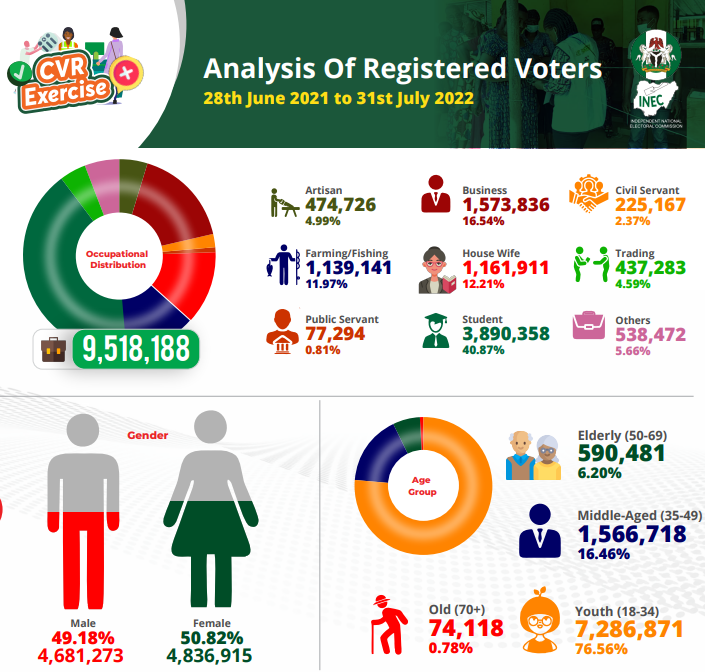
Figure 1 presents an analysis of the voter’s registration exercise of 2022 in the lead up to the 2023 election. From the data, there were over 9.5m news voters, 40.87% of which are students making up the largest group followed by business owners at 16.54% then farmers making up just about 11.97% of the new voters. Demographically, young people (18-34) make up 76.56% of the new voters for the 2023 election. However, as previously mentioned, this increase does not reflect in the election outcomes. Table 2 presents the occupational spread of accredited voters in the 2015 elections.
 Fig. 1 Analysis of Registered Voters 2022 (Source: INEC)
Table 2: Occupation Spread of 2015 Accredited voters (Source: NEC)
| Occupation | Total | % Accredited |
| Artisan | 1,047,660 | 4 |
| Business | 3,036,291 | 13 |
| Civil servant | 1,671,190 | 7 |
| Farming/fishing | 5,054,695 | 21 |
| Housewife | 4,137,769 | 18 |
| Other | 1,421,768 | 6 |
| Public servant | 533,691 | 2 |
| Student | 4,679,481 | 20 |
| Trading | 2,060,934 | 9 |
| Total | 23,643,479 | 100 |
The voters’ data presented in table 2 for the 2015 elections shows expectedly that students and farmers make up for close to 50% of the voters of which publicly available data corresponding to the demographic distribution of the country shows that at least 60% of voters in recent elections are young people age 18 to 34 who also make up the largest demography of people that do not turn out for elections. Unsurprisingly, the young demographic is the most important demographic that directly determine the outcomes of elections in the country either by showing up to vote or not showing up.
Implication
The analysis suggests that electoral success in Nigeria is less dependent on expanding the voter register and more dependent on efficiently mobilizing a consistent subset of voters. Given that turnout has remained within a relatively narrow band, political actors may achieve greater strategic advantage by focusing on voter activation, turnout optimization, and targeted engagement of reliable voting blocs. In practical terms, this means that the path to electoral victory lies not in increasing the size of the electorate, but in maximizing participation within an already constrained active voter base. This has significant implications for campaign strategy, resource allocation, and voter engagement models heading into future elections.
Highlights
- Elections will not be won by expanding the voter base — they will be won by controlling turnout. Mass registration drives are politically useful for optics, but strategically inefficient unless they convert to turnout
- Where votes come from matters more than how many exist. The young demography is the keystone demography that swings the elections, especially the students, farmers, and business owners who contribute at least 50% of the votes.
Some assumptions
- The election in February is a contribution factor to the poor turn out of young people (students). The strike of 2022/23 plays an important role in the heighten participation of the young people in campaigns even though that participation did not translate to high turn out during election.
- Insecurity is a major driver of poor voters turn out


Mental Well-being, Culture, and the Discipline of Inner Leadership - #BigIdeasPlatform2025
May 24, 2025 | In Big Ideas Post, Knowledge Hub, Op-Ed, Program & Events, Updates
In an era defined by constant activity and external pressure, the ability to pause has become increasingly rare.
Yet, that ability may be one of the most critical requirements for effective leadership.
Across societies, mental well-being is often discussed in clinical terms as stress, anxiety, burnout. While these are important, they only tell part of the story. Mental well-being is also shaped by culture, environment, and daily habits. It is influenced by how individuals process information, respond to pressure, and make decisions.
At the Big Ideas Platform 2025, Chuba and Chinemelum Ezekwesili explore this dimension through the lens of intentional living and inner leadership.
Their perspective challenges a common assumption: that external solutions alone can address internal strain. Instead, they argue that sustainable well-being begins with personal discipline, how individuals manage attention, energy, and response to their environment.
Modern life encourages constant engagement, continuous work, endless information, and little time for reflection. This creates a state of chronic reactivity, where decisions are driven by urgency rather than clarity.
The consequence is not only individual burnout, but weakened leadership capacity.
Effective leadership requires more than expertise or authority. It requires the ability to think clearly under pressure, to make considered decisions, and to maintain focus in complex environments. These capabilities are directly linked to mental well-being.
The framework proposed, slowing down, cultivating gratitude, and taking responsibility may appear simple, but it addresses a deeper issue: the need to stabilize the mind before attempting to influence systems.
This is particularly relevant in governance and public leadership, where decisions have wide-reaching consequences. A reactive mind cannot produce strategic outcomes.
Reframing mental well-being as a leadership discipline shifts the conversation. It positions inner stability not as a personal luxury, but as a professional necessity.
As societies confront increasingly complex challenges, the quality of leadership will depend not only on knowledge and policy, but on the mental clarity and resilience of those making decisions.
In that sense, mental well-being is not separate from leadership.
It is the foundation of it.
Menstrual health is not a peripheral issue. It is central to education, productivity, and mental well-being and by extension, to national development.
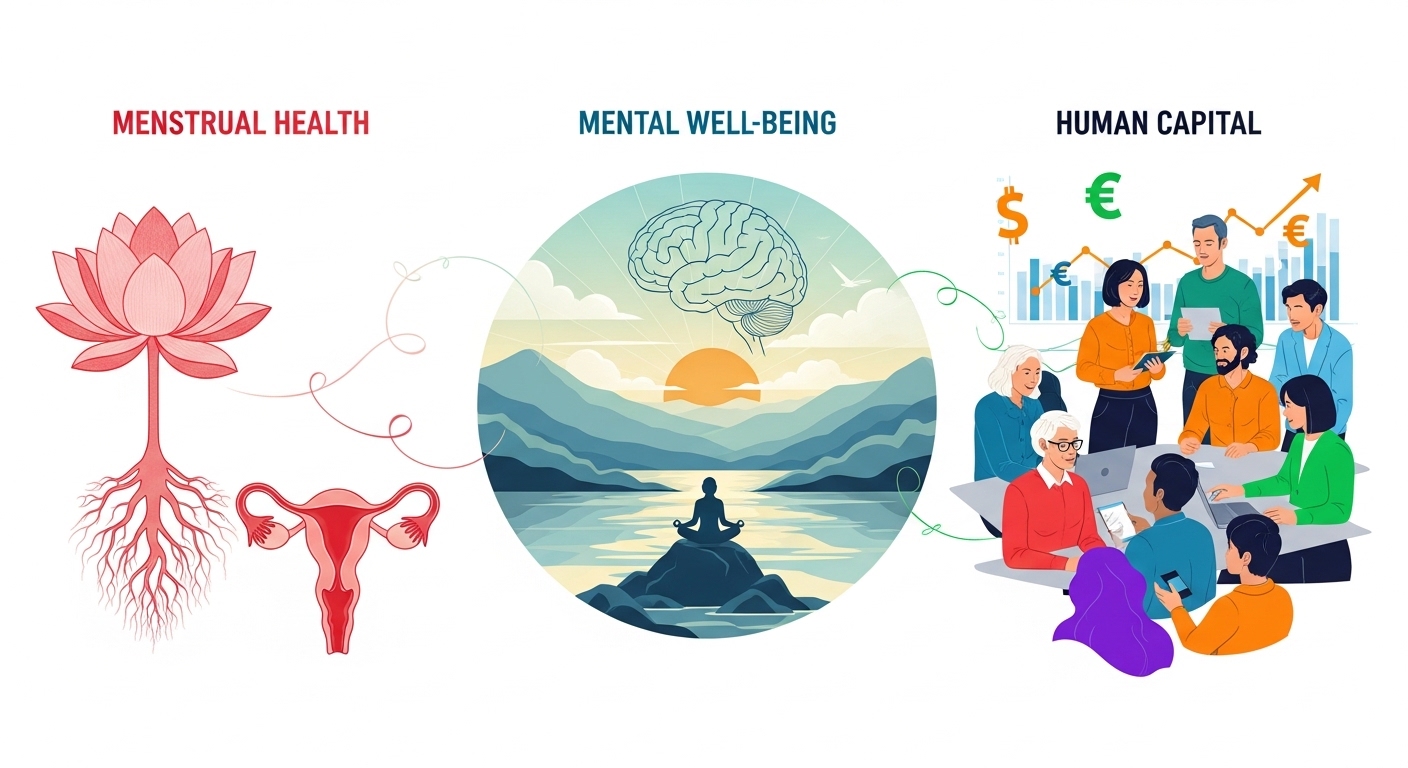
Menstrual Health, Mental Well-being, and Human Capital - #BigIdeasPlatform2025
May 24, 2025 | In Big Ideas Post, Knowledge Hub, Op-Ed, Program & Events, Updates
For millions of women and girls across Nigeria, menstruation is not simply a biological process. It is an experience shaped by silence, stigma, and limited support systems.
And that silence has consequences.
In many communities, conversations about menstrual health remain restricted, leaving young girls without the information or resources they need to manage their health with dignity. The result is visible in classrooms, where students miss school days each month, and in workplaces, where women navigate discomfort and reduced productivity without acknowledgement or accommodation.
These challenges are often framed as social or cultural issues. In reality, they are deeply connected to mental well-being and human capital development.
When a girl consistently misses school due to lack of menstrual support, the impact extends beyond lost learning time. It affects confidence, participation, and long-term opportunity. Over time, these disruptions accumulate, shaping educational and economic outcomes.
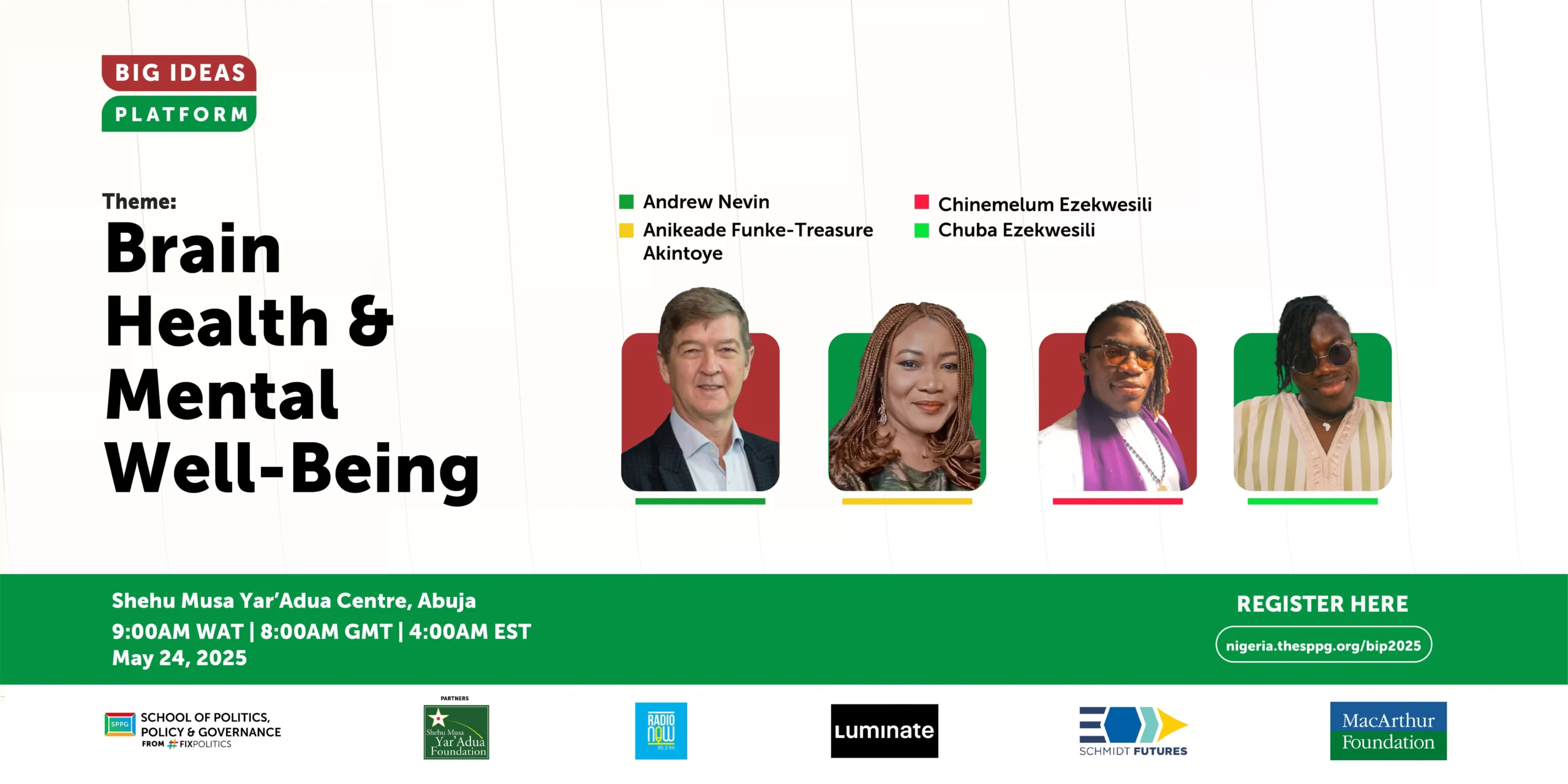
At the Big Ideas Platform 2025, Anikeade Funke-Treasure Akintoye brings attention to this critical intersection. Her work highlights how menstrual health influences not only physical well-being, but also mental health, affecting self-perception, emotional stability, and social participation.
The psychological effects of stigma, shame, anxiety, and silence are not incidental. They are central to the experience. When individuals are taught to hide a fundamental aspect of their biology, it shapes how they engage with the world.
Addressing this issue requires more than awareness campaigns. It demands structural solutions:
- Access to affordable menstrual products
- Comprehensive health education
- Inclusive policies in schools and workplaces
- Public conversations that challenge stigma
Historically, African societies have not always treated menstruation with silence. In some cultures, it was recognised as a significant life transition. This suggests that current attitudes are not fixed; they can be reshaped.
A nation’s development depends on its ability to fully utilise its human capital. Ignoring the realities that affect half the population undermines that goal.
Menstrual health is not a peripheral issue. It is central to education, productivity, and mental well-being and by extension, to national development.

Brain Health as Economic Infrastructure - #BigIdeasPlatform2025
May 24, 2025 | In Big Ideas Post, Knowledge Hub, Op-Ed, Program & Events, Updates
Familiar priorities: roads, power, capital, and institutions have long dominated Africa’s development conversation. These are critical. But they are not sufficient.
Beneath these visible challenges lies a quieter, more fundamental constraint: the cognitive capacity of the people expected to drive growth.
This is the case for brain health as economic infrastructure.
Across economies, productivity is often measured in output, GDP, employment rates, and industrial expansion. What is less frequently examined is the quality of thinking that produces that output. When individuals operate under chronic stress, fatigue, and cognitive overload, the consequences are not always immediate, but they are cumulative. Decision-making deteriorates. Creativity declines. Long-term planning gives way to short-term reactions.
Global evidence reinforces this reality. Neurological and mental health conditions are rising worldwide, with disproportionate impact on low- and middle-income countries. At the same time, millions of children face developmental barriers linked to poverty, affecting their cognitive potential before formal education even begins. These are not isolated health concerns—they are structural economic issues.
At the Big Ideas Platform 2025, Dr. Andrew Nevin advances a critical argument: that brain health should be treated with the same urgency as physical infrastructure. His work highlights that cognitive performance is not fixed, it is shaped by behaviour, environment, and policy.
Yet, modern work culture often undermines this potential. Multitasking, prolonged stress, and the glorification of constant activity are widely accepted as indicators of productivity. In reality, they erode focus, reduce efficiency, and weaken strategic thinking.
Nigeria does not lack talent. It lacks the systems that enable talent to perform optimally.
Reframing brain health as infrastructure shifts policy thinking. It calls for investments in early childhood development, workplace structures that prioritise cognitive sustainability, and leadership models grounded in an understanding of how the brain functions.
These are not abstract ideas. They are practical pathways to improving national productivity and governance outcomes.
As Africa seeks to build resilient economies, one truth becomes increasingly clear: sustainable development depends not only on what we build, but on how well we think.
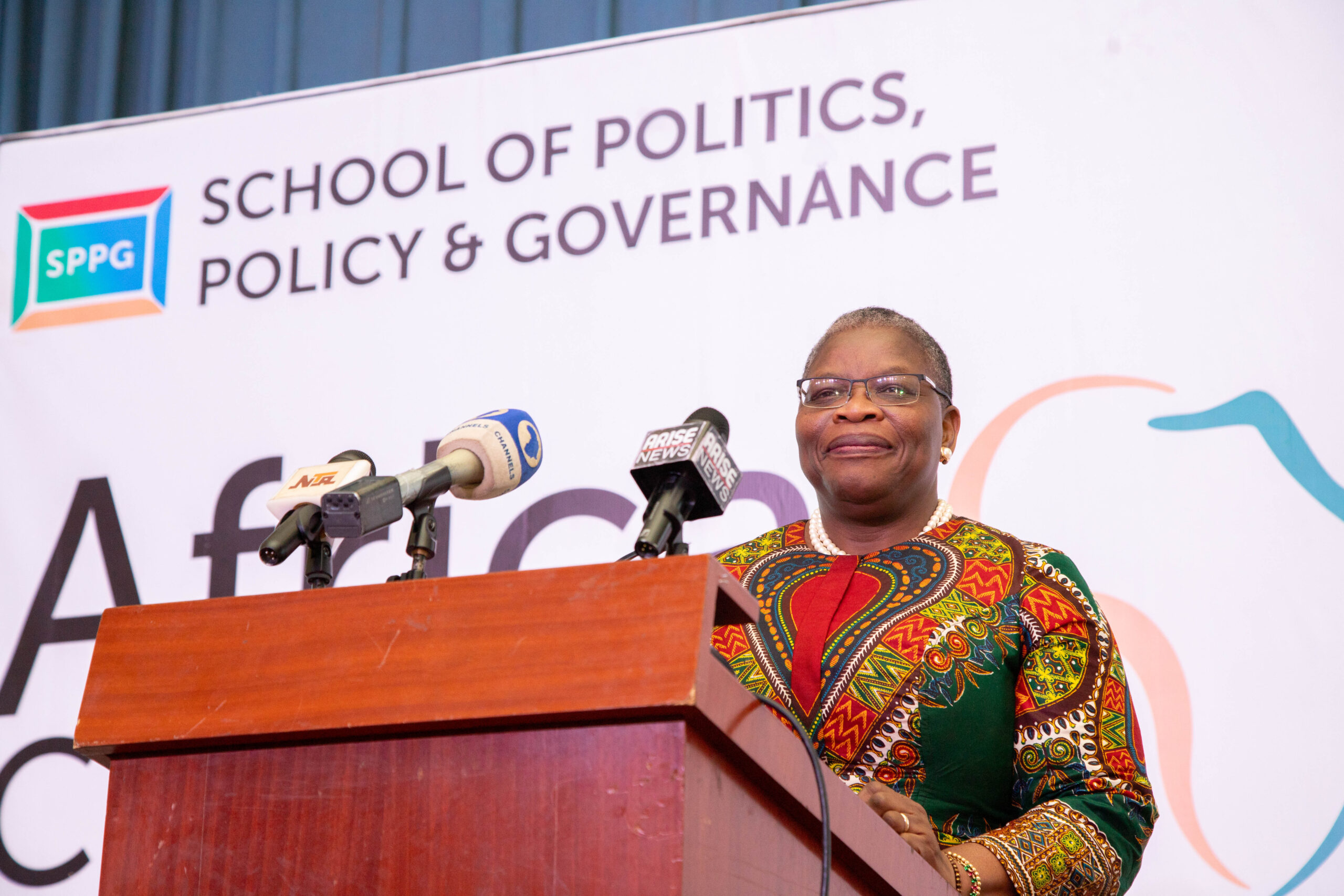
Why SPPG Is the Antidote to Elite Dysfunction
Why SPPG Is the Antidote to Elite Dysfunction
First, SPPG redefines what “elite” means.
Second, SPPG builds state capacity literacy.
Third, SPPG inoculates against corruption by design.
Fourth, SPPG creates a new elite network- one that competes with the old.
Fifth, SPPG is obsessed with mobility and inclusion.
Finally, SPPG focuses on legacy, not survival.

The Use of Artificial Intelligence in Detecting Fake News - #BigIdeasPlatform2024isHere
The spread of fake news has become a serious issue in today's digital age and challenges the foundation of our information society. In the modern day of social media rapid communication, the spread of false or misleading information disguising it as trustworthy journalism has achieved unmatched popularity. Fake news is a powerful force that affects all facets of our lives because it is so simple to generate false narratives and spread them to a large audience. The effects of fake news are severe and widespread, whether they involve politically driven misinformation efforts, sensationalised health claims, or false financial news.
The adverse effects of fake news are many and serious. It undermines people's confidence in trustworthy information sources and makes them doubtful of mainstream media and reputable institutions. The foundation of an educated society is being undermined by this lack of trust, creating uncertainty and false information. Fake news has the ability to sway public opinion, stir up anxiety, and even have an impact on important decisions like political elections. The democratic process is seriously endangered by the use of disinformation to manipulate public opinion. Therefore, the capacity to recognize fake news is crucial. It not only helps people make informed decisions, but it also protects the integrity of our information environment.
Advancements in Artificial Intelligence (AI) have significantly simplified daily human activities. Developed by OpenAI, the Chat Generative Pretrained Transformer (ChatGPT) serves as an example of these AI technologies. ChatGPT operates as a text-based conversational agent, providing textual responses to user queries. AI algorithms have been shown to be useful in detecting fake news or misinformation that may be interfering with efficiency and optimization. Proponents of using AI in the detection of fake news suggest that certain principles need to be followed, including the development of strategies by software designers to combat fake news, enabling software users to report fake news when detected, and keeping users informed of the dissemination of fake news. For example, deep learning, machine learning, and natural language processing can extract text- or image-based cues to train models to aid in the prediction of the authenticity of news. Alternatively, AI can be used to examine the social context of the news article, including features of the poster, such as the number of shares or retweets of the post. However, Generative AI tools like ChatGPT can also facilitate the spread of misinformation or fake news to the detriment of those seeking information on virtually any topic, particularly health, finances, and politics. In extreme cases, the spread of misinformation through the use of AI-generated videos or written content can set factions against one another, with violence.
The prevalence of large language models like ChatGPT in various domains, from healthcare to information dissemination, is undeniable. While they show promise in democratizing access to information and aiding in research, ethical and accuracy-related challenges loom large. Notably, the models’ capacity for generating misleading or false information raises ethical concerns, such as in the realm of fake news generation. The consequence extends from eroding trust in AI systems to affecting user perceptions, as corroborated by empirical studies. Additionally, personal harm can befall users as misinformation about health and finances, among other things, is generated and disseminated. Data ownership, user consent, and representational bias are additional layers of complexity in this discourse. Therefore, it is crucial to address these issues comprehensively for the responsible and equitable application of these potent tools in diverse sectors.
In our battle against the trend of fake news on social media, Artificial Intelligence offers powerful tools for mitigating the spread of misinformation, but its deployment must be accompanied by careful consideration of ethical, societal, and technical implications. Understanding fake news is as convoluted as understanding human behaviour. Consequently, fighting it requires multifaceted strategies. Considering that the technology that counters fake news is the same technology that created it, neutralizing it may take more than just the expertise of top tech companies. The potential methods of detection and neutralization through AI form the basis of the discussions that we will be having at the Big Idea Platform 2024.
In 2023, The School of Politics, Policy & Governance (SPPG) partnered with the Shehu Musa Yar’Adua Foundation to launch the inaugural Big Ideas Platform, centered around "Reawakening the African Renaissance: Pathways to Inclusive Growth and Development." Five innovative African leaders shared groundbreaking ideas aimed at improving African communities' quality of life. This year, The School of Politics, Policy & Governance (SPPG) is excited to announce Big Ideas Platform 2024, in collaboration with the Shehu Musa Yar’Adua Foundation, on May 25th, 2024. This year's theme, "Information Technology and Behaviour Change," will convene intellectuals, policymakers, technocrats, and changemakers to discuss transformative ideas and solutions for Africa's inclusive prosperity and sustainable development.
The event is open to the public, and registration is free. It will be a great opportunity to learn from thought leaders and professionals about how Artificial Intelligence can be harnessed not only to combat fake news but also to improve Africa's economy and enhance its development.
Date: May 25, 2024 (Africa Day)
Time: 9:00 AM – 12 PM WAT (GMT+1)
Venue: Shehu Musa Yar'Adua Center, Abuja/ Zoom
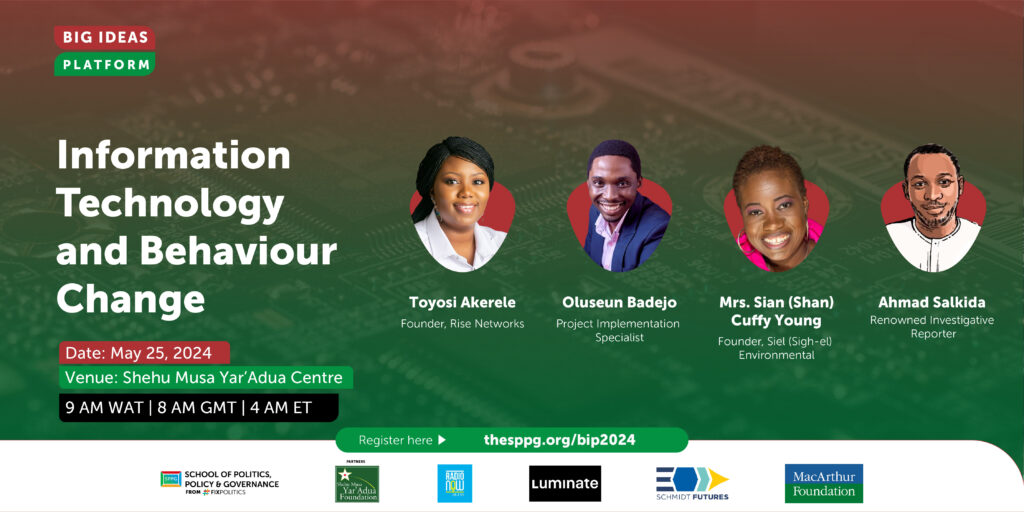
Click Here to register for #BIP2024 and stay up to date with event updates.


The Use of Virtual Reality In Addressing Challenges - #BigIdeasPlatform2024isHere
With the rapid technological advancements in recent decades, Virtual Reality (VR) has been increasingly adopted as a transformative technology with the potential to address various challenges across diverse fields. Virtual reality (VR) can be defined as an environment-building technology that enables participants to immerse themselves in their surroundings and interact with the elements. However, a broader definition of VR also includes non-immersive and semi-immersive virtual environments, such as desktop VR. This technology has gained popularity, with the market size projected to reach $62.1 billion by 2027. Previously, its use was mainly associated with entertainment and gaming, but the technology has also seen immense success in health care for training in complex procedures such as surgery, in the mining industry to simulate emergency situations, and in the automotive industry to improve driving and reduce accidents. The use of VR for training has seen immense growth because it provides an interactive learning environment that is both engaging and fun. For most people, it is something they do not use at home, so the experience is a major boon for the engagement of a workforce that would have previously experienced many different, conventional training programs.
One significant application of VR is in the fields of healthcare and education where the technology has transformed learning methods by providing immersive and interactive experiences. In the healthcare field, surgical simulators are used to enable trainee surgeons to practice procedures in a realistic virtual environment, reducing the learning curve and enhancing patient safety. VR experiences have been utilized to alleviate pain and discomfort during medical procedures, enhancing patient comfort and reducing reliance on traditional analgesics. In the field of education, VR simulators have been used to explore pivotal moments in history which enhances student engagement and retention. VR-based language learning applications also facilitate language acquisition through immersive cultural experiences and interactive exercises.
These diverse virtual training offer many advantages over traditional learning, which, even with engaging presenters, tends to rely on PowerPoint presentations that can be unappealing and reduce engagement. With a training program enhanced by VR, there is less training material required and the trainer’s time is reduced, making VR training convenient and easy to provide multiple times. Simulations in VR allow for mistakes to be made without experiencing the consequences, providing opportunities to try different ways of working and explore improvements, especially in activities that relate to emergency situations. For sequential activities, the repetition of the tasks in VR provides a safe environment to practice, increasing information retention and instilling confidence in the trainee to carry out the task in the real world. VR training is proving to be very cost-effective, as it brings the site to the trainee, eliminating the cost challenges that come with travel.
While the benefits and advantages of deploying this technology in enhancing training programs within different fields, there are certain ethical concerns that need to be addressed to fully maximise its effectiveness. The ethical concerns associated with VR technology are multi-faceted. One concern is addiction, where users may become excessively absorbed in virtual environments, which is detrimental to mental health. There is also a fear that virtual crime could escalate and become more prevalent in society, leading to confusion about what constitutes a real-world crime versus a virtual one. Another concern is the use of VR technology in various industries, such as military and defence, healthcare, and entertainment. The ethical implications of using VR in these industries are varied, ranging from the potential for creating more realistic and practical training scenarios to the possibility of exploiting vulnerable populations or exposing sensitive information. Additionally, there are privacy concerns surrounding VR technology. As users enter virtual environments, data is collected and stored on their actions, preferences, and behaviours. This personal data may be used to manipulate users and influence their actions, as seen in targeted advertising.
Despite these concerns, the future of VR appears promising, with ongoing advancements in hardware, software, and content development. These opportunities form the basis of the discussions that we will be having at the Big Idea Platform 2024.
In 2023, The School of Politics, Policy & Governance (SPPG) partnered with the Shehu Musa Yar’Adua Foundation to launch the inaugural Big Ideas Platform, centered around "Reawakening the African Renaissance: Pathways to Inclusive Growth and Development." Five innovative African leaders shared groundbreaking ideas aimed at improving African communities' quality of life. This year , The School of Politics, Policy & Governance (SPPG) is excited to announce Big Ideas Platform 2024, in collaboration with the Shehu Musa Yar’Adua Foundation, on May 25th, 2024. This year's theme, "Information Technology and Behaviour Change," will convene intellectuals, policymakers, technocrats, and changemakers to discuss transformative ideas and solutions for Africa's inclusive prosperity and sustainable development.
The event is open to the public, and registration is free. It will be a great opportunity to learn from thought leaders and professionals about how Virtual Reality can be harnessed not only to across diverse industries but also to improve Africa's economy and enhance its development.
Date: May 25, 2024 (Africa Day)
Time: 9:00 AM – 12 PM WAT (GMT+1)
Venue: Shehu Musa Yar'Adua Center, Abuja/ Zoom
Click Here to register for #BIP2024 and stay up to date with event updates.
Join us, let's co-create the Africa we need.
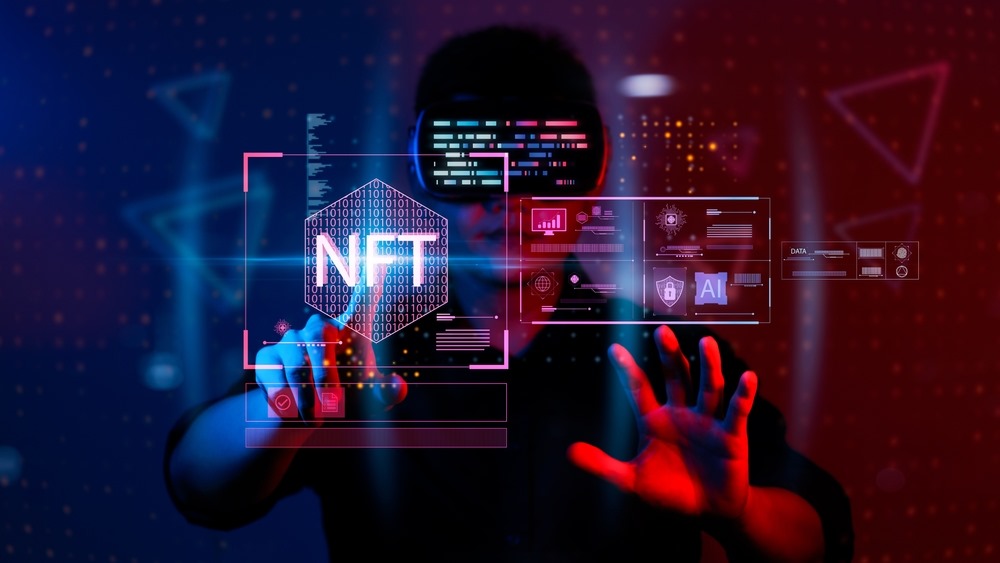
Unveiling the Impact of Blockchain Technology on the Educational System: #BigIdeasPlatform2024IsHere
Blockchain is a revolutionary technology that has the potential to revolutionise various industries, including finance, supply chain management, healthcare, and education. Its decentralised, secure, and transparent nature makes it ideal for use in industries where trust, security, and efficiency are of paramount importance. The integration of blockchain technology into the education system has the potential to greatly improve the efficiency, security, and credibility of the educational process. By creating secure and transparent platforms for tracking and verifying students’ academic achievements, blockchain technology can help to create a more accessible and trustworthy education system, making it easier for students to showcase their skills and knowledge to potential employers.
One of the primary benefits of blockchain in education is the creation of a tamper-proof and secure digital transcript. This transcript can store a student’s academic history, including grades, certifications, and other achievements, in a decentralised and secure manner. This can eliminate the need for traditional paper-based transcripts, which can be easily lost, damaged, or tampered with. Another potential benefit of blockchain in education is the creation of a centralised platform for the issuance and verification of digital credentials. This can greatly simplify the process of obtaining and verifying academic credentials, as it eliminates the need for intermediaries to validate them. Additionally, the secure and transparent nature of blockchain can help to prevent fraud, as it provides a reliable and tamper-proof record of a student’s achievements.
Another area where blockchain can have a significant impact is in the area of online education. By incorporating blockchain technology into online learning platforms, educators can create secure and trustworthy systems for delivering and tracking online courses and certifications. This can help to improve the credibility and recognition of online education, making it a more attractive option for students and employers alike. Starting with the general idea, blockchain is a revolutionary technology with the potential to revolutionise various industries, including education. By creating secure and transparent platforms for tracking and verifying students’ academic achievements, blockchain technology can help to create a more accessible and trustworthy education system, making it easier for students to showcase their skills and knowledge to potential employers.
One of the primary challenges hindering the widespread adoption of blockchain in education is the perceived technological complexity. Implementing blockchain-based solutions requires expertise in distributed systems, cryptography, and smart contract development, which may be beyond the capabilities of many educational institutions. Additionally, the regulatory and legal landscape surrounding blockchain technology is still evolving, posing uncertainties and compliance challenges for educational stakeholders. Concerns related to data privacy, intellectual property rights, and jurisdictional issues need to be addressed to ensure the lawful and ethical use of blockchain in education.
Despite these challenges, the integration of blockchain technology holds immense promise for transforming the educational system into a more transparent, secure, and efficient ecosystem. The potential of incorporating this technology into the educational sector in Africa forms the basis of the discussions that we will be having at the Big Idea Platform 2024.
In 2023, The School of Politics, Policy & Governance (SPPG) partnered with the Shehu Musa Yar’Adua Foundation to launch the inaugural Big Ideas Platform, centred around "Reawakening the African Renaissance: Pathways to Inclusive Growth and Development." Five innovative African leaders shared groundbreaking ideas aimed at improving African communities' quality of life. This year , The School of Politics, Policy & Governance (SPPG) is excited to announce Big Ideas Platform 2024, in collaboration with the Shehu Musa Yar’Adua Foundation, on May 25th, 2024. This year's theme, "Information Technology and Behaviour Change," will convene intellectuals, policymakers, technocrats, and changemakers to discuss transformative ideas and solutions for Africa's inclusive prosperity and sustainable development.
The event is open to the public, and registration is free. It will be a great opportunity to learn from thought leaders and professionals about the Use of Blockchain Technology In The Educational System.
Date: May 25, 2024 (Africa Day)
Time: 9:00 AM – 12 PM WAT (GMT+1)
Venue: Shehu Musa Yar'Adua Center, Abuja/ Zoom
Click Here to register for #BIP2024 and stay up to date with event updates.

The Use of Learning tools to Build awareness of Waste Management: #BigIdeasPlatform2024isHere
Solid Waste Management is a multifaceted problem comprising political, socioeconomic, institutional, and environmental aspects. Due to exponential urban growth, it has become one of the most significant issues faced by urban spaces in developing countries. The gap in environmental knowledge among the youth and the old within developing countries contributes to ecological issues or waste management problems, resulting in unsustainable development, with important consequences in low-income countries. Most of the low/middle-income countries are unable to provide effective waste management collection services because of resource constraints, lack of facilities including vehicles, and infrastructure, improper route planning, lack of technical know-how, and inadequate environmental education and awareness. To sustain SW or environmental issues in developing countries, formal education for sustainable development is essential at all levels of education, able to trigger a whole societal transformation. For better environmental sustainability or waste management sustainability education, teachers with the right knowledge, attitude, skills, and innovation, are required.
Awareness plays a pivotal role in shaping individual behaviours and attitudes towards waste management. Lack of awareness often leads to improper disposal practices such as littering, illegal dumping, and indiscriminate waste disposal, exacerbating environmental degradation and pollution. Educating the public about the environmental consequences of improper waste disposal and the benefits of adopting sustainable practices is crucial for fostering responsible behaviour and promoting a culture of waste reduction and recycling. Learning tools, including educational programs, digital applications, and interactive platforms, offer effective means of disseminating information and engaging individuals in waste management initiatives. Educational programs conducted in schools, communities, and workplaces provide structured learning experiences that raise awareness and promote sustainable waste practices among participants. Digital applications and online platforms offer interactive tools and resources, allowing users to access information, track their waste footprint, and participate in recycling programs conveniently.
The search for improved environmental quality has driven several governments in developing nations to adopt the use of Environmental Education in improving the attitude and behaviour of its citizenry towards waste management. One could ask what is the behaviour of undergraduate students towards waste management in Nigeria. Waste management behaviours are all attitude, disposition and perception towards properly disposing of waste in any environment one finds himself. Waste management behaviour includes open dumping, careless attitude towards properly disposing of institutional waste like food wrappers, torn books or papers, hotel food remains, vegetable remains etc. A degraded environment can only offer a degraded quality of life. If we really desire to sustain and improve upon the present quality of life, then it is the collective responsibility of every living human being to secure the quality of the environment.
It has been repeatedly emphasized that there is an irrepressible need for entrenching Environmental Education as a leading approach to solving environmental problems and creating a sustainable society. The poor as well as the affluent are equally vulnerable to environmental damage. The poor and poverty-stricken people, wherever they may live, are generally preoccupied with the issue of physical survival. They lack money, skills and knowledge and therefore oftentimes, tend to over-utilise local resources beyond sustainable levels. They, therefore, need to be empowered to be able to control their resources and therefore their lives according to the tenets of a sustainable, safe and clean environment for healthy living in society.
The implementation of these learning tools to facilitate Environmental Education faces several challenges, including limited access to technology and cultural differences. Additionally, sustaining public interest and engagement in long-term waste management initiatives requires continuous efforts and resources. These implementation methods and challenges form the basis of the discussions that we will be having at the Big Idea Platform 2024.
In 2023, The School of Politics, Policy & Governance (SPPG) partnered with the Shehu Musa Yar’Adua Foundation to launch the inaugural Big Ideas Platform, centered around "Reawakening the African Renaissance: Pathways to Inclusive Growth and Development." Five innovative African leaders shared groundbreaking ideas aimed at improving African communities' quality of life. This year , The School of Politics, Policy & Governance (SPPG) is pleased to announce Big Ideas Platform 2024, in collaboration with the Shehu Musa Yar’Adua Foundation, on May 25th, 2024. This year's theme, "Information Technology and Behaviour Change," will convene intellectuals, policymakers, technocrats, and changemakers to discuss transformative ideas and solutions for Africa's inclusive prosperity and sustainable development.
The event is open to the public, and registration is free. It will be a great opportunity to learn from thought leaders and professionals about how we can Use of Learning tools to Build awareness of Waste Management.
Date: May 25, 2024 (Africa Day)
Time: 9:00 AM – 12 PM WAT (GMT+1)
Venue: Shehu Musa Yar'Adua Center, Abuja/ Zoom
Click Here to register for #BIP2024 and stay up to date with event updates.
About the Big Ideas Platform: The Big Ideas Platform is a thought leadership initiative developed by the School of Politics, Policy, and Governance. With a focus on empowering African innovators and amplifying their voices, this platform aims to promote dialogue, collaboration, and action to address the pressing challenges faced by African communities. By highlighting transformative ideas, the Big Ideas Platform strives to facilitate inclusive growth, development, and the realization of the African Renaissance.

Fuel Subsidy and the Real Economy - Precious Chimdimma Ebere Class of 2022
Opinion piece by Precious Chimdimma Ebere Class of 2022
As one who read Social and Public Policy at my Master's level and has been privy to contributing to developing policies at both local and international levels, I have seen the implications of how a badly executed policy has tremendously affected the polity of the economy.
Having carried out a previous study on the implications of fuel subsidy on the economy, social welfare, and overall development of Nigeria, to share my findings let us first delve deep into understanding what Fuel Subsidy is. Fuel subsidy refers to the government's practice of artificially lowering the price of petroleum products, particularly gasoline, through financial interventions. While it may seem like a beneficial policy, especially for consumers who enjoy lower fuel prices, the long-term consequences of fuel subsidy can be detrimental to the country's progress.
As a public policy expert who understands both lenses (mass agitation vs government policy), it is imperative that the government maintain a balance when implementing changes or removing policies. When a particular policy, such as fuel subsidy, is removed, it is crucial to have measures in place to mitigate any potential negative consequences and ensure a smooth transition. The goal is to avoid disruptions that could lead to social unrest or economic instability, thereby safeguarding national peace.
The practice of artificially lowering the price of petroleum products through financial interventions has been a longstanding policy in Nigeria. While it may initially appear beneficial by providing affordable fuel to consumers, the long-term consequences of fuel subsidy pose significant dangers to the country's development and growth. This article will explore the implications of fuel subsidy on Nigeria's economy, social welfare, and overall progress. It highlights the drain on the national budget, fostering inefficiency in the energy sector, contributing to corruption, and hindering market dynamics and innovation. It also emphasizes the need for a balanced approach in policy implementation and offers insights into the UK's experience with policy transitions.
The Drain on the National Budget:
One of the major dangers of fuel subsidies is their significant drain on the national budget. For example, let’s say, the intention of the government to subsidize petrol was simply to make the product affordable for Nigerians and make life easier. So, the average price of petrol in the world can be as high as N590, however, the Nigerian Government will subsidize the product and fix the price at N185 bringing the total amount of subsidy per liter to N405.
According to data released by NNPC in 2022, the average consumption of liters of petrol in Nigeria per day is 60 million liters. Even though The controversy surrounding the actual daily petrol consumption in Nigeria has been unending with the different agencies in charge of the importation and distribution of Premium Motor Spirits reeling out conflicting figures. The daily petrol consumption in Nigeria remains a mystery. However, If the average consumption of petrol in Nigeria per day is indeed 60 million liters, it would indicate a significant demand for petrol in the country. Nigeria is one of the largest oil-producing countries in Africa, and petroleum products, including petrol, play a crucial role in the country's energy and transportation sectors.
However, Marketers of the product load as much as 100 million liters and above per day.
This means the Nigerian Government is expected to pay as much as N405 × 100,000,000 (liters) as subsidy per day to the Marketers of the product to keep prices at N185 for instance. This brings the amounts to N40.5 billion daily and about N1.2 trillion monthly. Kindly take note that this amount can either decrease or increase following the prices of petrol at the international market.
So, just try to wrap your head around it and know what Nigeria expends on fuel subsidy alone in a year - obviously some billions of dollars.
From the government's end; subsidizing fuel requires a substantial amount of public funds that could otherwise be allocated to critical sectors such as education, healthcare, infrastructure, and social welfare programs. This limits the government's ability to invest in these areas, hindering overall development and growth. One may beg to ask, how judiciously have people in authority utilized the national budget to advance the economy?
To determine the actual daily petrol consumption; the NNPC, which is currently responsible for importing 100 percent of petrol into the country, needs to submit its accounts for forensic auditing as advised by experts.
Fostering Inefficiency in the Energy Sector:
Analyzing from the lens of the Energy Sector, Fuel subsidy fosters inefficiency in the sector by discouraging private investment. When the government artificially lowers fuel prices, it reduces the incentive for private sector participation in the petroleum industry. This lack of investment hampers the development of domestic refining capabilities, leading to heavy reliance on imported petroleum products. Consequently, Nigeria becomes dependent on foreign sources for its energy needs, negatively impacting national sovereignty and economic stability.
Contribution to Corruption and Rent-Seeking Behaviors:
Looking at the various caveats explored above, it is evident that fuel subsidy also contributes to widespread corruption and rent-seeking behaviors. The opaque nature of subsidy disbursement and the large sums of money involved create opportunities for corrupt practices. Some individuals exploit the system to divert funds meant for fuel subsidy, leading to a significant loss of public resources. These corrupt practices perpetuate inequality and hinder socioeconomic development.
Distortion of Market Dynamics and Inhibition of Innovation:
Market analysts and Climate change activists will argue that fuel subsidy distorts market dynamics and discourages innovation in the energy sector. When prices are artificially low, there is little incentive for consumers to adopt energy-efficient technologies or explore alternative sources of energy. This inhibits the transition to cleaner and more sustainable energy solutions, which are crucial for addressing climate change and reducing environmental pollution.
In contrast, if fuel subsidies are phased out or removed, it creates a more level playing field for different energy sources. The true cost of fossil fuels, including their environmental and social impacts, is reflected in the market price. This can incentivize consumers and businesses to seek out cleaner energy options and invest in innovative technologies that reduce dependence on fossil fuels.
For instance, higher fuel prices can stimulate demand for electric vehicles (EVs) and encourage the development of charging infrastructure. With the removal of fuel subsidies, consumers may be more motivated to consider EVs as a viable alternative, leading to increased adoption and market growth. This, in turn, spurs innovation in the EV industry, with companies investing in research and development to improve battery technology, extend driving range, and reduce costs in a more sustainable way. This indeed could usher us into the future of energy sustainability.
A Balanced Approach to Policy Implementation:
Having analyzed the pros and cons of fuel subsidy, in the realm of public policy, it is imperative to maintain a balance when implementing changes or removing policies. When a particular policy, such as fuel subsidy, is removed, it is crucial to have measures in place to mitigate any potential negative consequences and ensure a smooth transition. The goal is to avoid disruptions that could lead to social unrest or economic instability, thereby safeguarding national peace.
To articulate this concept better, let's consider the example of strategically removing fuel subsidy. Instead of abruptly ending the subsidy, a comprehensive approach should be adopted. This approach involves researching and implementing alternative policies and measures that cater to a balance between the needs of the people and the larger economic objectives.
For instance, when removing fuel subsidy, the government can introduce targeted social safety net programs to protect vulnerable populations from sudden price shocks. These programs can provide direct cash transfers, subsidies on essential goods and services especially on transportation, or support for income-generating activities. By implementing such measures, the government ensures that the removal of the subsidy does not disproportionately burden those already facing economic hardships, thereby maintaining social cohesion.
While safety net programs require government expenditure, their impact on the national budget can be managed through careful budgetary planning and fiscal discipline. Governments can implement measures such as means-testing, periodic reassessments, and cost controls to ensure that the programs are effectively reaching the intended beneficiaries while minimizing waste and preventing excessive strain on public finances. Also, these safety net programs can provide an economic multiplier effect. By providing support to vulnerable individuals or households, these programs can help maintain a certain level of consumer spending, which, in turn, can stimulate demand and contribute to economic activity. This can have indirect benefits for businesses and employment, leading to overall economic stability and growth.
Additionally, when removing a policy like fuel subsidy, the government should simultaneously work towards creating an enabling environment for private sector participation and investment. This can be achieved by implementing supportive policies, such as improving the ease of doing business, providing incentives for domestic refining and alternative energy sources, and promoting competition in the energy sector. These measures stimulate economic growth, foster innovation, and create employment opportunities, thereby mitigating any potential negative impacts on the economy.
Furthermore, effective communication and transparency are vital during policy transitions. The government should engage with stakeholders, including civil society organizations, experts, and affected communities, to ensure their concerns are heard and addressed. Transparent reporting on the utilization of public funds and regular audits can help build trust and hold those in authority accountable for their actions, reducing the likelihood of corruption and mismanagement.
Lessons from the UK's Experience with Policy Transitions: Universal Credit
While doing a case study on Universal Credit a welfare benefit system introduced in the United Kingdom, designed to simplify the process of receiving various social security benefits into a single monthly payment. It replaces six existing benefits, including housing benefits and income support, and aims to provide a more streamlined and responsive support system for individuals and families. I picked up a few strategic lessons. The UK government's implementation of Universal Credit provides valuable lessons on policy transitions and the importance of considering social and economic balance. Comprehensive planning, gradual implementation, and mitigating potential negative impacts were key aspects of the Universal Credit reform. The government actively engaged with stakeholders supported employment opportunities, and implemented monitoring and evaluation processes to ensure the policy's success. Even though there were a few lapses in the proper execution, it was commendable by the larger populace. Incorporating these lessons into policy-making processes can enhance the likelihood of achieving desired objectives while maintaining social and economic balance.
Recommendation for the Nigeria Government
In order to ensure a comprehensive and balanced approach to the fuel subsidy removal policy and its impact on the Nigerian population, the government should consider the following recommendations:
- Conduct a thorough and inclusive analysis: The government should undertake a comprehensive analysis of the fuel subsidy removal policy, taking into account the perspectives and concerns of various stakeholders, including citizens, businesses, and experts. This analysis should assess the short-term and long-term effects of the policy on the livelihoods of Nigerians and the overall economy.
- Consider the welfare of the average Nigerian: When determining fuel prices, the government should consider the minimum wage and the standard of living of the average Nigerian. This will help ensure that the cost of fuel remains affordable and does not disproportionately burden the most vulnerable segments of society.
- Implement measures to mitigate the adverse effects: Recognizing that the removal of fuel subsidies may have negative consequences, especially for low-income individuals and households, the government should implement targeted measures to mitigate these effects. This could include implementing social safety nets, such as direct cash transfers or subsidies for essential goods and services, to cushion the impact on vulnerable populations.
- Explore alternative solutions: Instead of relying solely on fuel subsidy removal, the government should explore alternative solutions to address the challenges in the energy sector. This could involve promoting renewable energy sources, improving energy efficiency, and diversifying the energy mix. By investing in sustainable and clean energy solutions, the government can reduce dependence on fossil fuels and create a more resilient and environmentally friendly energy system.
- Prioritize citizen welfare: Above all, the government should prioritize the welfare and well-being of the Nigerian people. This means actively listening to their concerns, engaging in open dialogue, and incorporating their feedback into policy decisions. By adopting a citizen-centric approach, the government can ensure that its actions align with the needs and aspirations of the Nigerian population.
In conclusion, the politics behind fuel subsidy in Nigeria, while often perceived as a means of providing short-term relief to citizens, pose significant dangers to the country's development and growth. When removing a policy, measures should be put in place to mitigate potential negative consequences and maintain social harmony. To achieve sustainable development and foster economic growth, a balanced approach to policy implementation is essential, including targeted social safety net programs, fostering private sector participation, promoting transparency, and engaging with stakeholders. Certainly, accountability and judicious utilization of the national budget by people in authority play a crucial role in advancing the economy and ensuring overall development. While it is true that some individuals in positions of power have misused public funds, it is essential to recognize that effective public policies and good governance can address these challenges and foster positive outcomes. By adopting such a comprehensive approach, policymakers can navigate policy transitions effectively, avoiding distortions of national peace and fostering sustainable development.

Precious Chimdimma Ebere Class of 2022
Social media Handles
Facebook: https://www.facebook.com/preciouseberegem
Twitter: https://twitter.com/preciousebere
Instagram: https://www.instagram.com/preciousebere_gem/
LinkedIn: https://www.linkedin.com/in/precious-ebere-4452b2132