
Mental Well-being, Culture, and the Discipline of Inner Leadership - #BigIdeasPlatform2025
May 24, 2025 | In Big Ideas Post, Knowledge Hub, Op-Ed, Program & Events, Updates
In an era defined by constant activity and external pressure, the ability to pause has become increasingly rare.
Yet, that ability may be one of the most critical requirements for effective leadership.
Across societies, mental well-being is often discussed in clinical terms as stress, anxiety, burnout. While these are important, they only tell part of the story. Mental well-being is also shaped by culture, environment, and daily habits. It is influenced by how individuals process information, respond to pressure, and make decisions.
At the Big Ideas Platform 2025, Chuba and Chinemelum Ezekwesili explore this dimension through the lens of intentional living and inner leadership.
Their perspective challenges a common assumption: that external solutions alone can address internal strain. Instead, they argue that sustainable well-being begins with personal discipline, how individuals manage attention, energy, and response to their environment.
Modern life encourages constant engagement, continuous work, endless information, and little time for reflection. This creates a state of chronic reactivity, where decisions are driven by urgency rather than clarity.
The consequence is not only individual burnout, but weakened leadership capacity.
Effective leadership requires more than expertise or authority. It requires the ability to think clearly under pressure, to make considered decisions, and to maintain focus in complex environments. These capabilities are directly linked to mental well-being.
The framework proposed, slowing down, cultivating gratitude, and taking responsibility may appear simple, but it addresses a deeper issue: the need to stabilize the mind before attempting to influence systems.
This is particularly relevant in governance and public leadership, where decisions have wide-reaching consequences. A reactive mind cannot produce strategic outcomes.
Reframing mental well-being as a leadership discipline shifts the conversation. It positions inner stability not as a personal luxury, but as a professional necessity.
As societies confront increasingly complex challenges, the quality of leadership will depend not only on knowledge and policy, but on the mental clarity and resilience of those making decisions.
In that sense, mental well-being is not separate from leadership.
It is the foundation of it.
Menstrual health is not a peripheral issue. It is central to education, productivity, and mental well-being and by extension, to national development.
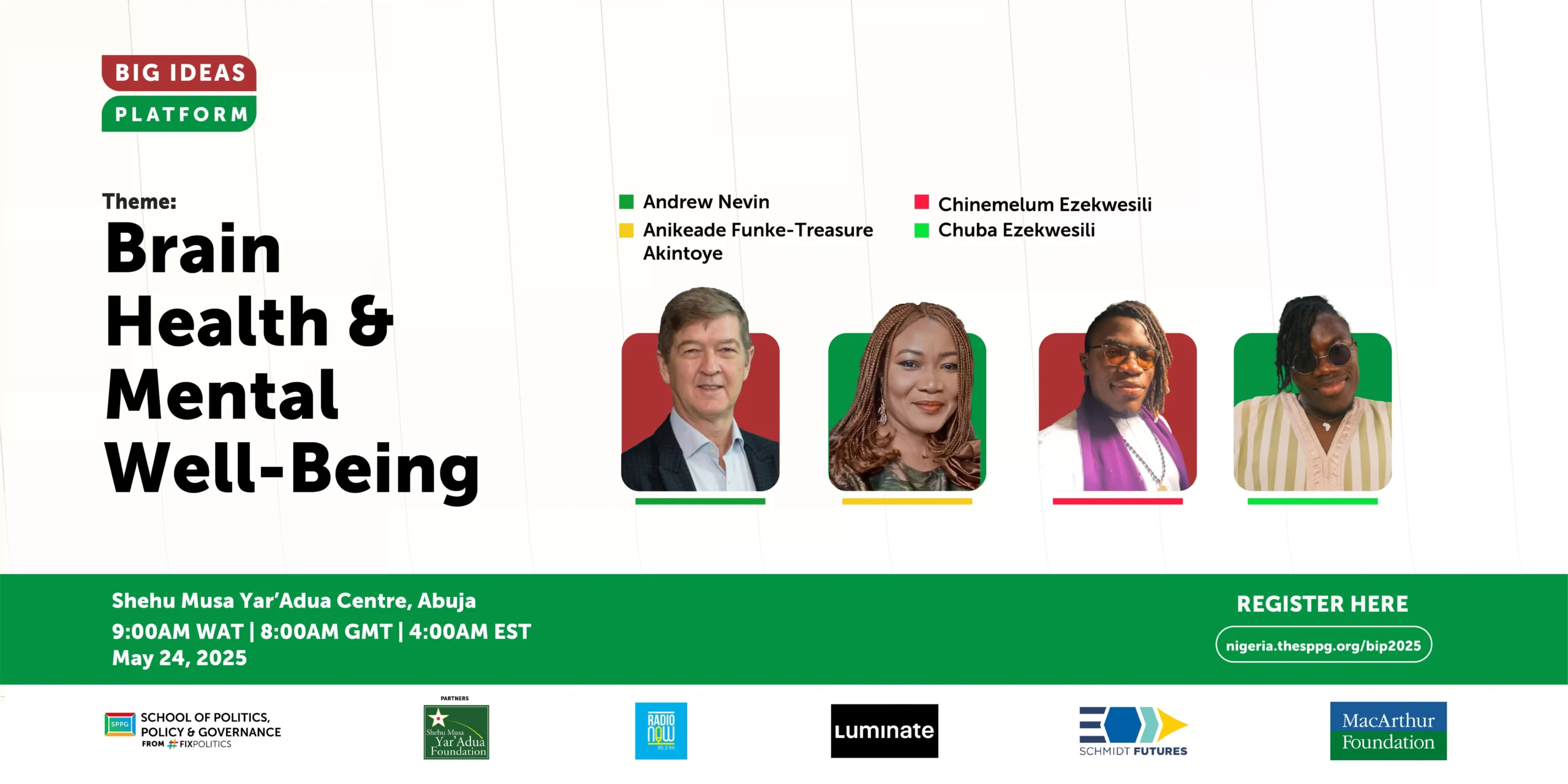

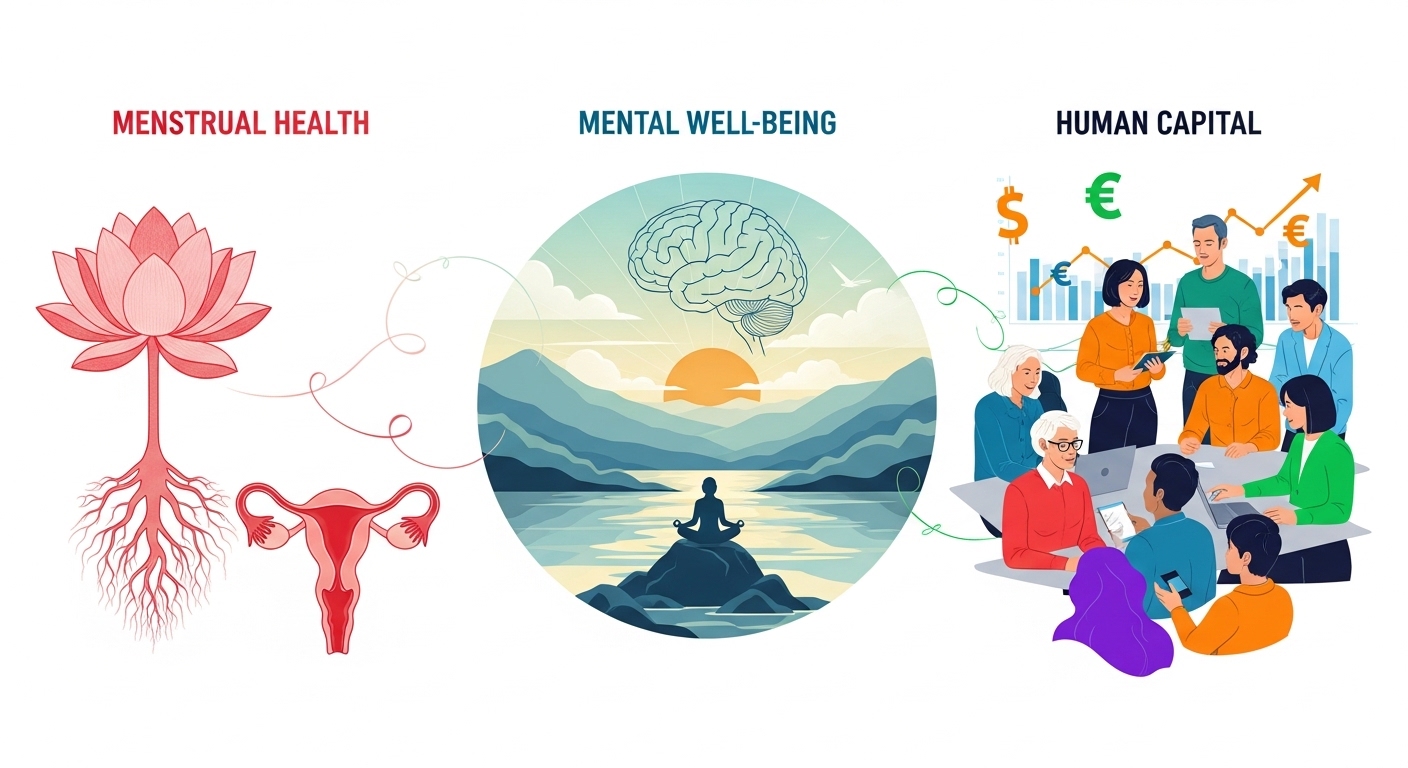
Menstrual Health, Mental Well-being, and Human Capital - #BigIdeasPlatform2025
May 24, 2025 | In Big Ideas Post, Knowledge Hub, Op-Ed, Program & Events, Updates
For millions of women and girls across Nigeria, menstruation is not simply a biological process. It is an experience shaped by silence, stigma, and limited support systems.
And that silence has consequences.
In many communities, conversations about menstrual health remain restricted, leaving young girls without the information or resources they need to manage their health with dignity. The result is visible in classrooms, where students miss school days each month, and in workplaces, where women navigate discomfort and reduced productivity without acknowledgement or accommodation.
These challenges are often framed as social or cultural issues. In reality, they are deeply connected to mental well-being and human capital development.
When a girl consistently misses school due to lack of menstrual support, the impact extends beyond lost learning time. It affects confidence, participation, and long-term opportunity. Over time, these disruptions accumulate, shaping educational and economic outcomes.
At the Big Ideas Platform 2025, Anikeade Funke-Treasure Akintoye brings attention to this critical intersection. Her work highlights how menstrual health influences not only physical well-being, but also mental health, affecting self-perception, emotional stability, and social participation.
The psychological effects of stigma, shame, anxiety, and silence are not incidental. They are central to the experience. When individuals are taught to hide a fundamental aspect of their biology, it shapes how they engage with the world.
Addressing this issue requires more than awareness campaigns. It demands structural solutions:
- Access to affordable menstrual products
- Comprehensive health education
- Inclusive policies in schools and workplaces
- Public conversations that challenge stigma
Historically, African societies have not always treated menstruation with silence. In some cultures, it was recognised as a significant life transition. This suggests that current attitudes are not fixed; they can be reshaped.
A nation’s development depends on its ability to fully utilise its human capital. Ignoring the realities that affect half the population undermines that goal.
Menstrual health is not a peripheral issue. It is central to education, productivity, and mental well-being and by extension, to national development.
Brain Health as Economic Infrastructure - #BigIdeasPlatform2025
May 24, 2025 | In Big Ideas Post, Knowledge Hub, Op-Ed, Program & Events, Updates
Familiar priorities: roads, power, capital, and institutions have long dominated Africa’s development conversation. These are critical. But they are not sufficient.
Beneath these visible challenges lies a quieter, more fundamental constraint: the cognitive capacity of the people expected to drive growth.
This is the case for brain health as economic infrastructure.
Across economies, productivity is often measured in output, GDP, employment rates, and industrial expansion. What is less frequently examined is the quality of thinking that produces that output. When individuals operate under chronic stress, fatigue, and cognitive overload, the consequences are not always immediate, but they are cumulative. Decision-making deteriorates. Creativity declines. Long-term planning gives way to short-term reactions.
Global evidence reinforces this reality. Neurological and mental health conditions are rising worldwide, with disproportionate impact on low- and middle-income countries. At the same time, millions of children face developmental barriers linked to poverty, affecting their cognitive potential before formal education even begins. These are not isolated health concerns—they are structural economic issues.
At the Big Ideas Platform 2025, Dr. Andrew Nevin advances a critical argument: that brain health should be treated with the same urgency as physical infrastructure. His work highlights that cognitive performance is not fixed, it is shaped by behaviour, environment, and policy.
Yet, modern work culture often undermines this potential. Multitasking, prolonged stress, and the glorification of constant activity are widely accepted as indicators of productivity. In reality, they erode focus, reduce efficiency, and weaken strategic thinking.
Nigeria does not lack talent. It lacks the systems that enable talent to perform optimally.
Reframing brain health as infrastructure shifts policy thinking. It calls for investments in early childhood development, workplace structures that prioritise cognitive sustainability, and leadership models grounded in an understanding of how the brain functions.
These are not abstract ideas. They are practical pathways to improving national productivity and governance outcomes.
As Africa seeks to build resilient economies, one truth becomes increasingly clear: sustainable development depends not only on what we build, but on how well we think.
Big Ideas Platform 2024: Recap of the Bold Ideas for Africa's Renaissance
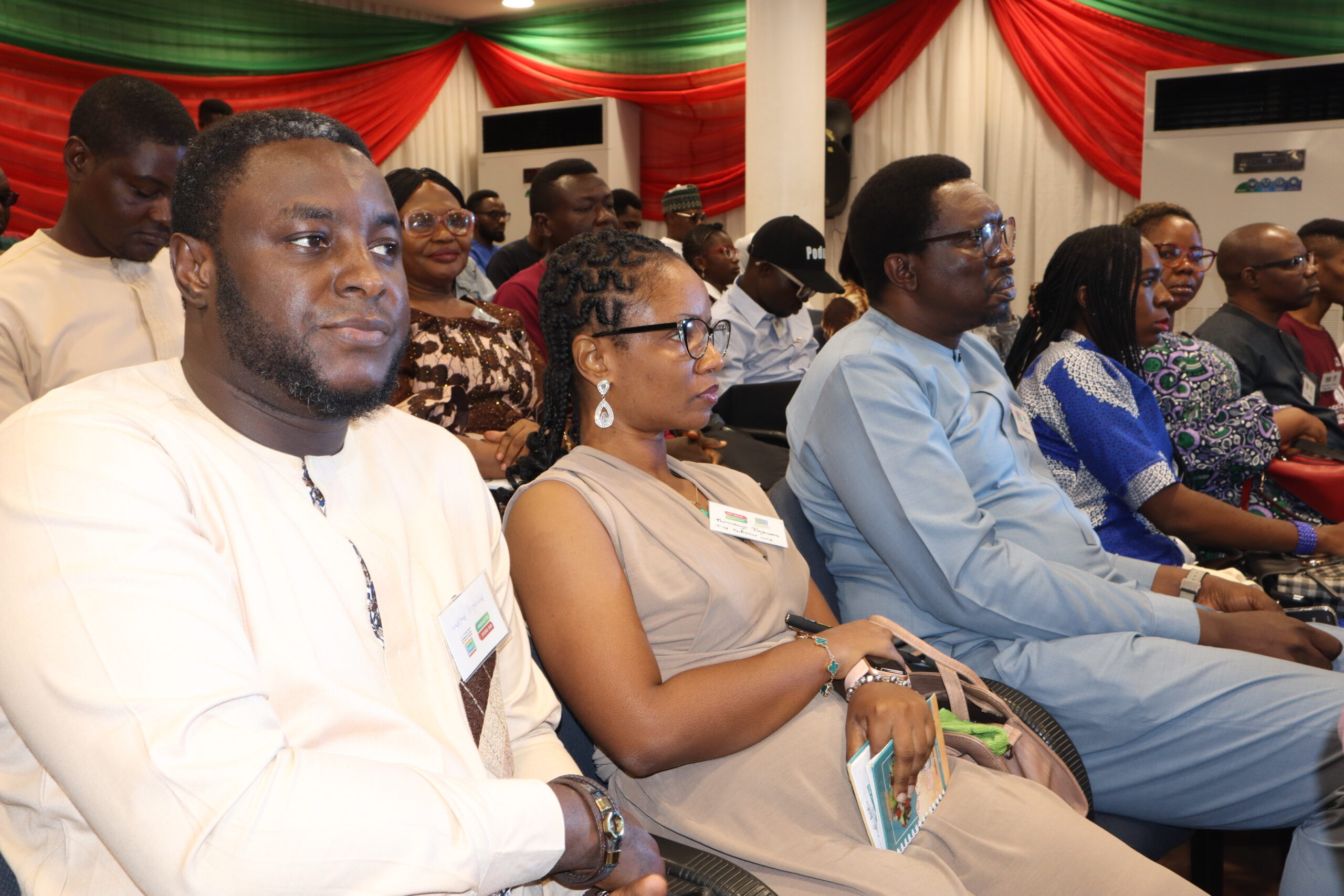
[Abuja – May 25, 2024] – The School of Politics, Policy, and Governance (SPPG), in partnership with the Yar’Adua Foundation and MacArthur Foundation, hosted the Big Ideas Platform 2024 on Saturday, May 25, at the Shehu Musa Yar’Adua Centre in Abuja. The event, themed ‘Information Technology and Behavior Change’ centred on leveraging technology and socio-behavioural programming as ‘game changers’ for Africa's transformation.
The event kicked off with an opening remark by the CEO of SPPG, Alero Ayida-Otobo “Technology is truly a game changer, playing a pivotal role in addressing significant developmental challenges across sectors in Africa: Communication, Commerce, Medicine, Education, Security, Food Production, and so much more." The platform spotlighted four subthemes - blockchain technology, environmental awareness, virtual reality, and artificial intelligence (AI) - and had four of Africa’s bright minds share their big ideas.
Four Big Ideas Curators
Oluseun Badejo, project implementation specialist and team lead of the SPPG Blockchain Project shared his big idea on deploying blockchain technology deployment in the educational sector to address critical issues like certificate forgery, data alteration, and ensure that academic records are secure, accessible, authentic, and verifiable by employers and academic institutions without the hassle of running back to your alma mater each time your academic records are requested, scratch the traditional filing of academic records which takes time to find and has resulted to people losing academic and professional opportunities. This technology could be revolutionary in addressing the rampant issue of fake transcripts in Nigeria and across Africa. This will offer a secure and cost-effective solution for verifying academic credentials.
Speaking in a session on waste management tools, Sian Cuffy Young, an award-winning waste management consultant, educator and social entrepreneur, and founder of Siel (Sigh-el) Environmental, a highly successful social enterprise that revolutionises waste perception and practices for individuals and businesses, shared her big idea on how to create environmental awareness in children, educate them so they can make informed environmental choices. She emphasised that effective environmental change begins with an individual commitment to sanitise our environment as a personal responsibility. Her big idea cites the ‘innovative use of educational books and animations targeted at younger generations to underscore the need for teaching practical waste management skills early’. This focus on proactive methods over interventionist awareness campaigns will drive lasting environmental change.
Sabiqah Bello, representing Ahmad Salkida, the CEO of HumanAngle, a niche media platform using virtual reality to humanise Africa’s conflict, humanitarian, and development issues to evoke empathy, talked about their groundbreaking exploration of virtual reality (VR) in journalism. Offering a glimpse into the future of digital storytelling, the session illustrated VR's ability to immerse viewers in the lived experiences of others, enhancing empathy and understanding. For journalists, VR technology represents a powerful tool for conveying emotional and impactful narratives, potentially transforming the framing and dissemination of news stories.
Toyosi Akerele-Ogunsiji, Technology Education Professional, and Founder of Rise Networks and Passnonwnow, shared her big idea highlighting the critical role of artificial intelligence (AI) for information verification in today’s data-heavy world. Akerele emphasised AI's capacity to identify false reports, a key factor in combating misinformation. She also stressed the importance of integrating AI courses into educational curricula to prepare Africa’s growing population of AI users. By investing in AI, Africa can enhance its global competitiveness, ensuring that students and professionals are equipped with the necessary skills to utilise AI effectively.
Here's a critical commentary by Toyosi Akerele-Ogunsiji on AI
The VillageSquare Conversation
But beyond these big ideas, there was a question of how to scale them to transform Africa and build a better future. Dr Amina Salihu, the Deputy Director Africa Office of the MacArthur Foundation, pioneer Dean of SPPG and the lead of SPPG’s thought-leadership, led this conversation during The VillageSquare Conversation. Ajibola Amzat, a Nigerian investigative journalist, pointed out that technology can be useful but can be used as a weapon the other way round. Prof Remi Sonaiya, Nigerian politician and educationalist, and one-time presidential candidate, cited that the real challenges we face involve the ethical use of technology. She warned that technology, like a knife, can be a tool for good or harm and that the focus should be on the ethical dimension, character, competence, and capacity. However, Frank Nweke Jnr, a Nigerian Politician, Entrepreneur, Teacher and Social Innovator, and two-time Federal Minister cautioned that Africa is not represented in discussions on the global agenda regarding artificial intelligence. He added that the world will continue to have needs, and those with artificial intelligence expertise will be crucial in meeting them. On the other hand, Dr Obiageli ‘Oby’ Ezekwesili, Founder and Chair of the #FixPolitics, shared her concerns that it is the rate of the dearth of ideas that distinguishes one country from the other, one continent from the other, and reaffirmed SPPG’s determination to ensure that these big ideas will give resultant transformation in our continent.
The 2024 Big Ideas Platform proved to be an enlightening experience that offered attendees and uptakers a wealth of knowledge on the transformative potential of technology in addressing some of the continent's most pressing issues.
As the event concluded, it was clear that the big ideas, insights, and innovations presented hold significant promise for driving positive change in Africa. The 2024 Big Ideas Platform successfully highlighted the critical intersection of technology and development, leaving attendees eager to take action for social impact across Nigeria and the broader African continent.
Join us, let's co-create the Africa we need.
About the Big Ideas Platform: The Big Ideas Platform is a thought leadership initiative developed by the School of Politics, Policy, and Governance. With a focus on empowering African innovators and amplifying their voices, this platform aims to promote dialogue, collaboration, and action to address the pressing challenges faced by African communities. By highlighting transformative ideas, the Big Ideas Platform strives to facilitate inclusive growth, development, and the realization of the African Renaissance.


Unveiling the Impact of Blockchain Technology on the Educational System: #BigIdeasPlatform2024IsHere
Blockchain is a revolutionary technology that has the potential to revolutionise various industries, including finance, supply chain management, healthcare, and education. Its decentralised, secure, and transparent nature makes it ideal for use in industries where trust, security, and efficiency are of paramount importance. The integration of blockchain technology into the education system has the potential to greatly improve the efficiency, security, and credibility of the educational process. By creating secure and transparent platforms for tracking and verifying students’ academic achievements, blockchain technology can help to create a more accessible and trustworthy education system, making it easier for students to showcase their skills and knowledge to potential employers.
One of the primary benefits of blockchain in education is the creation of a tamper-proof and secure digital transcript. This transcript can store a student’s academic history, including grades, certifications, and other achievements, in a decentralised and secure manner. This can eliminate the need for traditional paper-based transcripts, which can be easily lost, damaged, or tampered with. Another potential benefit of blockchain in education is the creation of a centralised platform for the issuance and verification of digital credentials. This can greatly simplify the process of obtaining and verifying academic credentials, as it eliminates the need for intermediaries to validate them. Additionally, the secure and transparent nature of blockchain can help to prevent fraud, as it provides a reliable and tamper-proof record of a student’s achievements.
Another area where blockchain can have a significant impact is in the area of online education. By incorporating blockchain technology into online learning platforms, educators can create secure and trustworthy systems for delivering and tracking online courses and certifications. This can help to improve the credibility and recognition of online education, making it a more attractive option for students and employers alike. Starting with the general idea, blockchain is a revolutionary technology with the potential to revolutionise various industries, including education. By creating secure and transparent platforms for tracking and verifying students’ academic achievements, blockchain technology can help to create a more accessible and trustworthy education system, making it easier for students to showcase their skills and knowledge to potential employers.
One of the primary challenges hindering the widespread adoption of blockchain in education is the perceived technological complexity. Implementing blockchain-based solutions requires expertise in distributed systems, cryptography, and smart contract development, which may be beyond the capabilities of many educational institutions. Additionally, the regulatory and legal landscape surrounding blockchain technology is still evolving, posing uncertainties and compliance challenges for educational stakeholders. Concerns related to data privacy, intellectual property rights, and jurisdictional issues need to be addressed to ensure the lawful and ethical use of blockchain in education.
Despite these challenges, the integration of blockchain technology holds immense promise for transforming the educational system into a more transparent, secure, and efficient ecosystem. The potential of incorporating this technology into the educational sector in Africa forms the basis of the discussions that we will be having at the Big Idea Platform 2024.
In 2023, The School of Politics, Policy & Governance (SPPG) partnered with the Shehu Musa Yar’Adua Foundation to launch the inaugural Big Ideas Platform, centred around "Reawakening the African Renaissance: Pathways to Inclusive Growth and Development." Five innovative African leaders shared groundbreaking ideas aimed at improving African communities' quality of life. This year , The School of Politics, Policy & Governance (SPPG) is excited to announce Big Ideas Platform 2024, in collaboration with the Shehu Musa Yar’Adua Foundation, on May 25th, 2024. This year's theme, "Information Technology and Behaviour Change," will convene intellectuals, policymakers, technocrats, and changemakers to discuss transformative ideas and solutions for Africa's inclusive prosperity and sustainable development.
The event is open to the public, and registration is free. It will be a great opportunity to learn from thought leaders and professionals about the Use of Blockchain Technology In The Educational System.
Date: May 25, 2024 (Africa Day)
Time: 9:00 AM – 12 PM WAT (GMT+1)
Venue: Shehu Musa Yar'Adua Center, Abuja/ Zoom