

Mental Well-being, Culture, and the Discipline of Inner Leadership - #BigIdeasPlatform2025
May 24, 2025 | In Big Ideas Post, Knowledge Hub, Op-Ed, Program & Events, Updates
In an era defined by constant activity and external pressure, the ability to pause has become increasingly rare.
Yet, that ability may be one of the most critical requirements for effective leadership.
Across societies, mental well-being is often discussed in clinical terms as stress, anxiety, burnout. While these are important, they only tell part of the story. Mental well-being is also shaped by culture, environment, and daily habits. It is influenced by how individuals process information, respond to pressure, and make decisions.
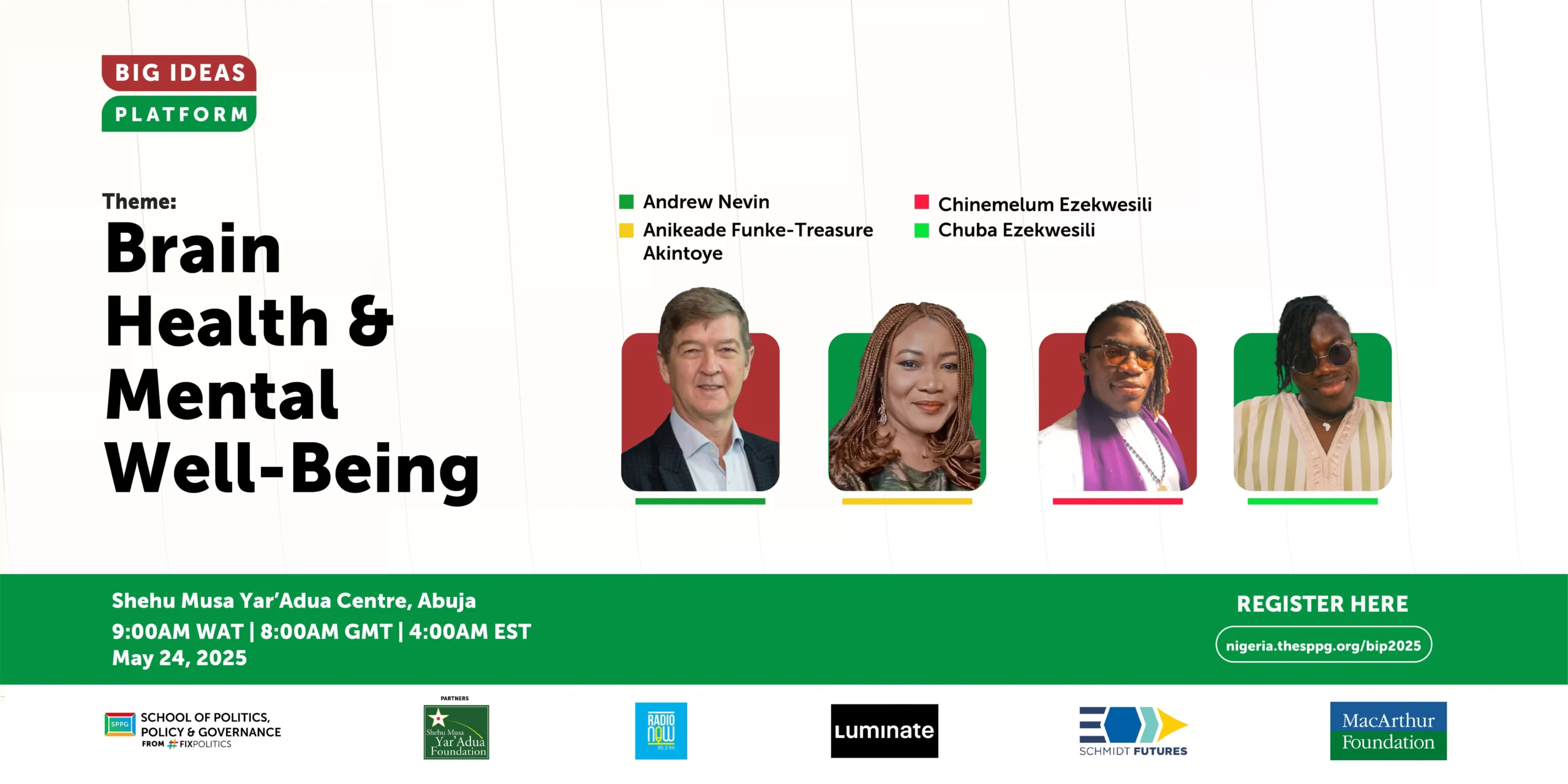
At the Big Ideas Platform 2025, Chuba and Chinemelum Ezekwesili explore this dimension through the lens of intentional living and inner leadership.
Their perspective challenges a common assumption: that external solutions alone can address internal strain. Instead, they argue that sustainable well-being begins with personal discipline, how individuals manage attention, energy, and response to their environment.
Modern life encourages constant engagement, continuous work, endless information, and little time for reflection. This creates a state of chronic reactivity, where decisions are driven by urgency rather than clarity.
The consequence is not only individual burnout, but weakened leadership capacity.
Effective leadership requires more than expertise or authority. It requires the ability to think clearly under pressure, to make considered decisions, and to maintain focus in complex environments. These capabilities are directly linked to mental well-being.
The framework proposed, slowing down, cultivating gratitude, and taking responsibility may appear simple, but it addresses a deeper issue: the need to stabilize the mind before attempting to influence systems.
This is particularly relevant in governance and public leadership, where decisions have wide-reaching consequences. A reactive mind cannot produce strategic outcomes.
Reframing mental well-being as a leadership discipline shifts the conversation. It positions inner stability not as a personal luxury, but as a professional necessity.
As societies confront increasingly complex challenges, the quality of leadership will depend not only on knowledge and policy, but on the mental clarity and resilience of those making decisions.
In that sense, mental well-being is not separate from leadership.
It is the foundation of it.
Menstrual health is not a peripheral issue. It is central to education, productivity, and mental well-being and by extension, to national development.

Menstrual Health, Mental Well-being, and Human Capital - #BigIdeasPlatform2025
May 24, 2025 | In Big Ideas Post, Knowledge Hub, Op-Ed, Program & Events, Updates
For millions of women and girls across Nigeria, menstruation is not simply a biological process. It is an experience shaped by silence, stigma, and limited support systems.
And that silence has consequences.
In many communities, conversations about menstrual health remain restricted, leaving young girls without the information or resources they need to manage their health with dignity. The result is visible in classrooms, where students miss school days each month, and in workplaces, where women navigate discomfort and reduced productivity without acknowledgement or accommodation.
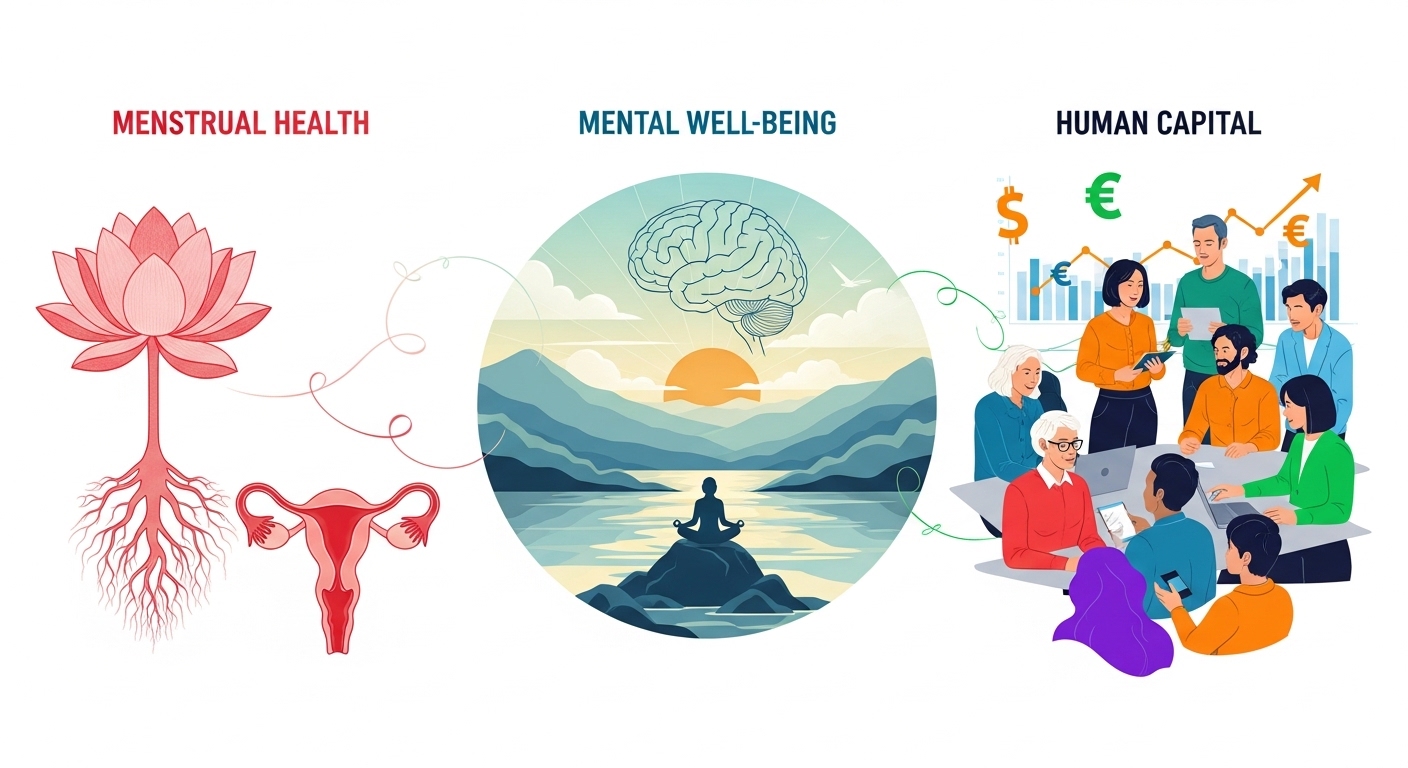
These challenges are often framed as social or cultural issues. In reality, they are deeply connected to mental well-being and human capital development.
When a girl consistently misses school due to lack of menstrual support, the impact extends beyond lost learning time. It affects confidence, participation, and long-term opportunity. Over time, these disruptions accumulate, shaping educational and economic outcomes.
At the Big Ideas Platform 2025, Anikeade Funke-Treasure Akintoye brings attention to this critical intersection. Her work highlights how menstrual health influences not only physical well-being, but also mental health, affecting self-perception, emotional stability, and social participation.
The psychological effects of stigma, shame, anxiety, and silence are not incidental. They are central to the experience. When individuals are taught to hide a fundamental aspect of their biology, it shapes how they engage with the world.
Addressing this issue requires more than awareness campaigns. It demands structural solutions:
- Access to affordable menstrual products
- Comprehensive health education
- Inclusive policies in schools and workplaces
- Public conversations that challenge stigma
Historically, African societies have not always treated menstruation with silence. In some cultures, it was recognised as a significant life transition. This suggests that current attitudes are not fixed; they can be reshaped.
A nation’s development depends on its ability to fully utilise its human capital. Ignoring the realities that affect half the population undermines that goal.
Menstrual health is not a peripheral issue. It is central to education, productivity, and mental well-being and by extension, to national development.

Brain Health as Economic Infrastructure - #BigIdeasPlatform2025
May 24, 2025 | In Big Ideas Post, Knowledge Hub, Op-Ed, Program & Events, Updates
Familiar priorities: roads, power, capital, and institutions have long dominated Africa’s development conversation. These are critical. But they are not sufficient.
Beneath these visible challenges lies a quieter, more fundamental constraint: the cognitive capacity of the people expected to drive growth.
This is the case for brain health as economic infrastructure.
Across economies, productivity is often measured in output, GDP, employment rates, and industrial expansion. What is less frequently examined is the quality of thinking that produces that output. When individuals operate under chronic stress, fatigue, and cognitive overload, the consequences are not always immediate, but they are cumulative. Decision-making deteriorates. Creativity declines. Long-term planning gives way to short-term reactions.
Global evidence reinforces this reality. Neurological and mental health conditions are rising worldwide, with disproportionate impact on low- and middle-income countries. At the same time, millions of children face developmental barriers linked to poverty, affecting their cognitive potential before formal education even begins. These are not isolated health concerns—they are structural economic issues.
At the Big Ideas Platform 2025, Dr. Andrew Nevin advances a critical argument: that brain health should be treated with the same urgency as physical infrastructure. His work highlights that cognitive performance is not fixed, it is shaped by behaviour, environment, and policy.
Yet, modern work culture often undermines this potential. Multitasking, prolonged stress, and the glorification of constant activity are widely accepted as indicators of productivity. In reality, they erode focus, reduce efficiency, and weaken strategic thinking.
Nigeria does not lack talent. It lacks the systems that enable talent to perform optimally.
Reframing brain health as infrastructure shifts policy thinking. It calls for investments in early childhood development, workplace structures that prioritise cognitive sustainability, and leadership models grounded in an understanding of how the brain functions.
These are not abstract ideas. They are practical pathways to improving national productivity and governance outcomes.
As Africa seeks to build resilient economies, one truth becomes increasingly clear: sustainable development depends not only on what we build, but on how well we think.