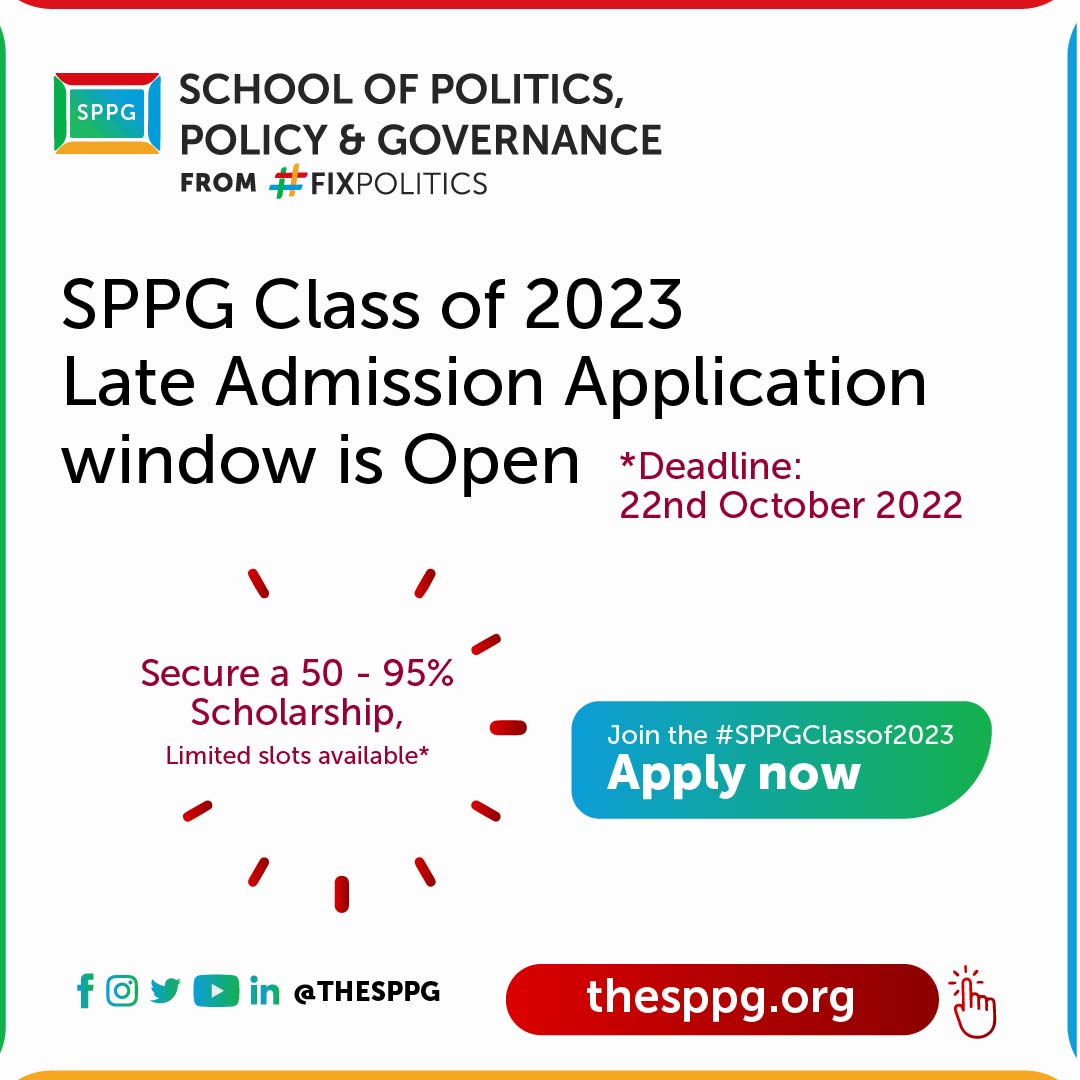
Late-admission window into the #SPPGClassof2023 is open and closes on October 22nd 2022
Late-admission application window into the #SPPGClassof2023 is open and closes on October 22nd 2022
The SPPG, School of Politics, Policy and Governance, established in 2020, is building a pipeline of a new and disruptive-thinking political class with a mission to transform the quality of political and public leadership in Nigeria and the rest of Africa. The School is a unique Public Leadership Preparation initiative.
The SPPG educates present and future leaders that are committed to public good and who are ready to serve as stewards of the well-being of all Nigerians. The School delivers an unconventional multidisciplinary curriculum that is aimed at producing a massive base of ethical, competent and capable public leadership with the requisite knowledge and skills to solve complex development problems in our country and continent.
So far, SPPG has graduated 2 cohorts of students as #PioneerClassof2021 (160) and #Classof2022 (133). Consistent with the mission of TheSPPG.org, upon graduation, many of our students run for elective offices across various parties while others pursue leadership careers in the public and private sectors as well as civil society.
In furtherance of our mission and commitment to equity and diversity, we have decided to open a Late Admission Window for those who wish to apply to the #Classof2023. The deadline for applications using the Late Application Window is extremely tight and ends on October 22, 2022. Admission to the SPPG is highly competitive through a rigorous selection process conducted entirely virtually.
To apply, visit thesppg.org .
Who can apply?
- All applicants must have a minimum educational qualification of a B.Sc or HND/BA.
- Applicants must be able to demonstrate commitment to public leadership.
- The ability to demonstrate the successful execution of projects will be an advantage.
- What you need to apply
- Applicants are required to upload the following to the online application portal:
- Academic qualification (BA, B.Sc or HND).
- Master or any other Post Graduate Certificate (if applicable).
- Personal Statement (Maximum – 750 words).
- Curriculum Vitae (Maximum – 2 pages).
- Details of 2 recommenders (peer, community leader or employer who must have known you for a minimum of 6 months and can vouch for your character and suitability for this program).
Application Deadline
To fast-track the admissions process, applicants are expected to fulfil all admission requirements on or before October 22 2022.
Limited scholarship slots are available. Terms and conditions apply.
Incomplete applications (applications without recommendation letters) will be disqualified.
To learn more about the School of Politics, Policy and Governance, visit thesppg.org.

SPPG Graduates 133 new disruptive thinking leaders in 2022
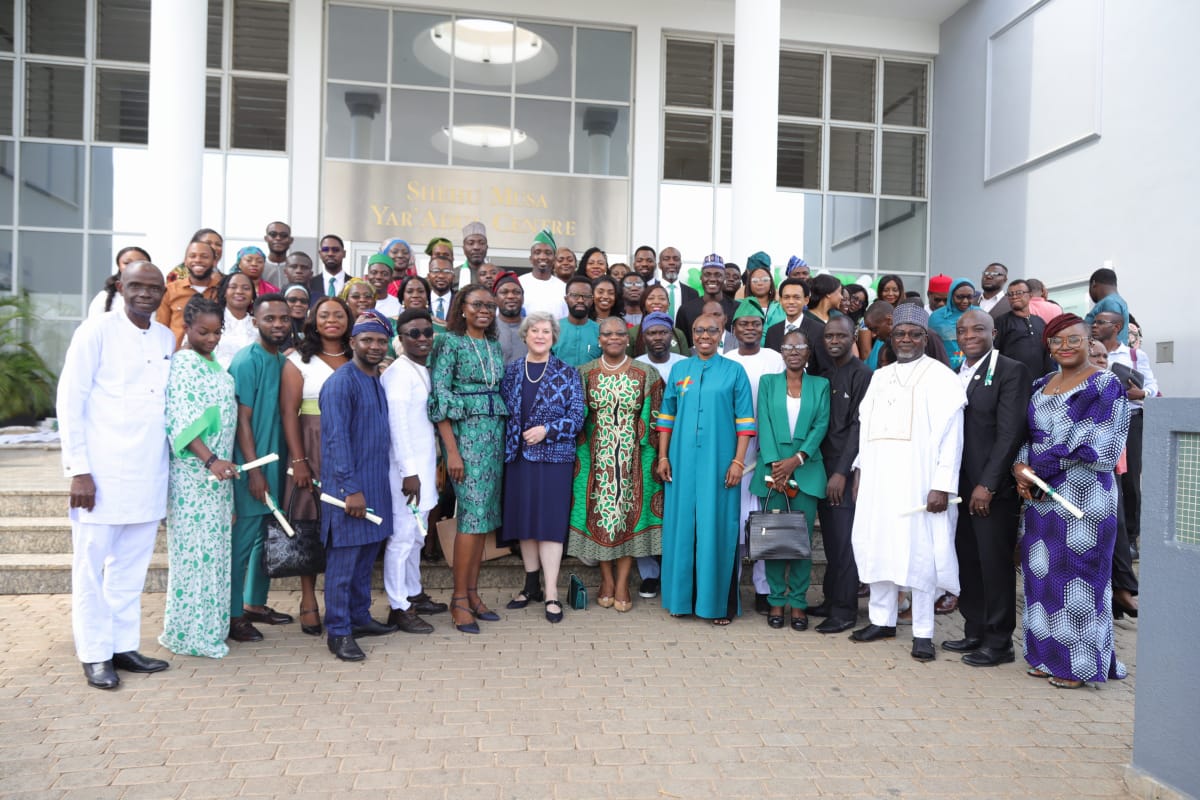
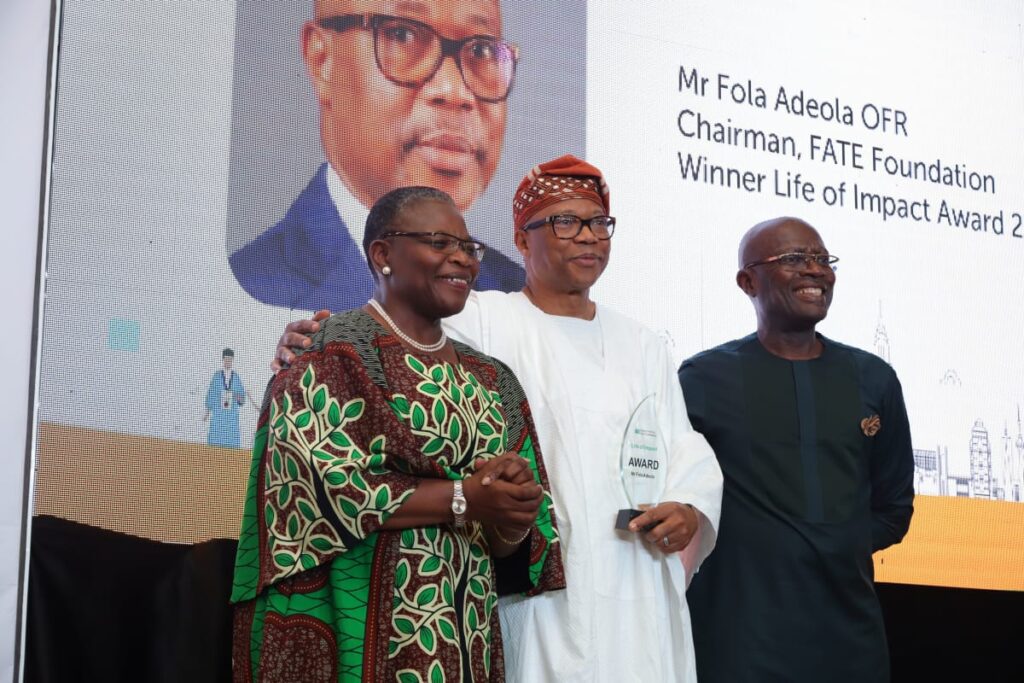
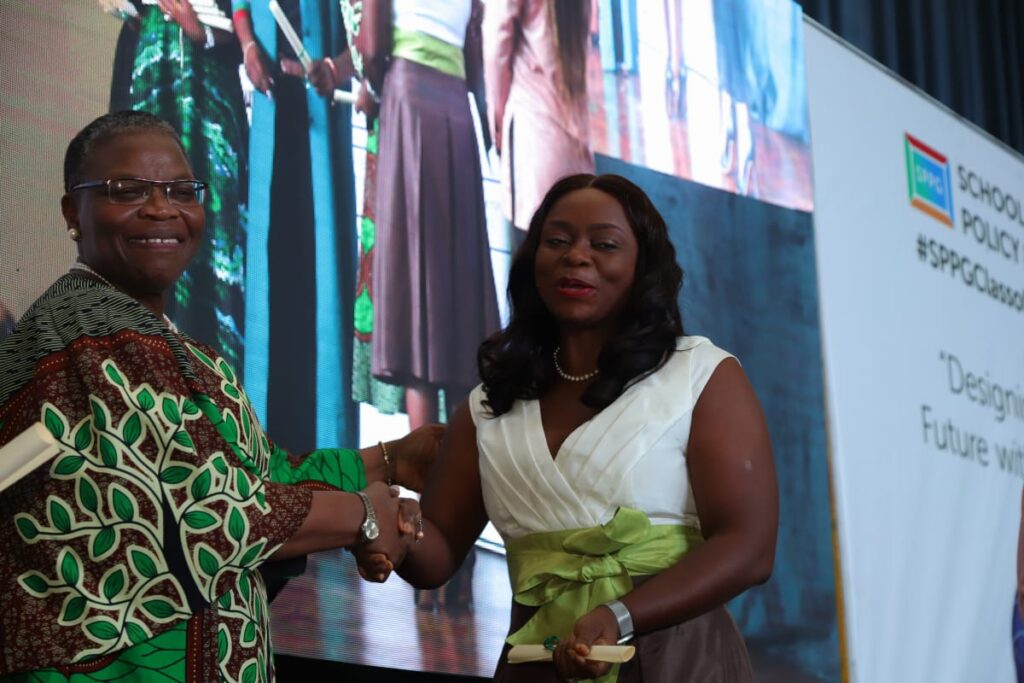
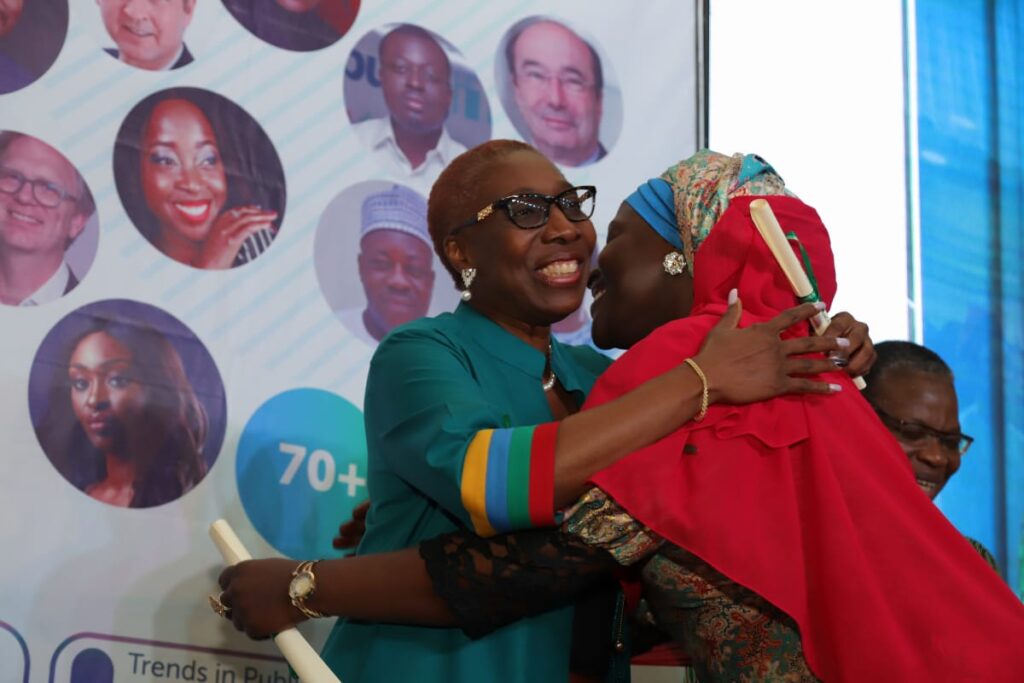
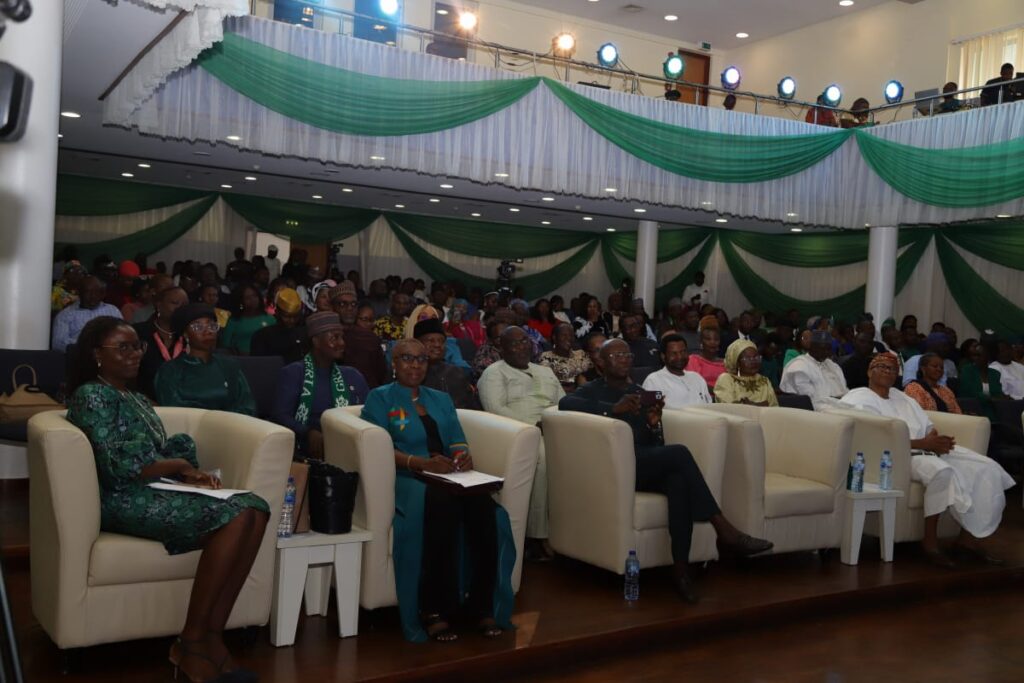
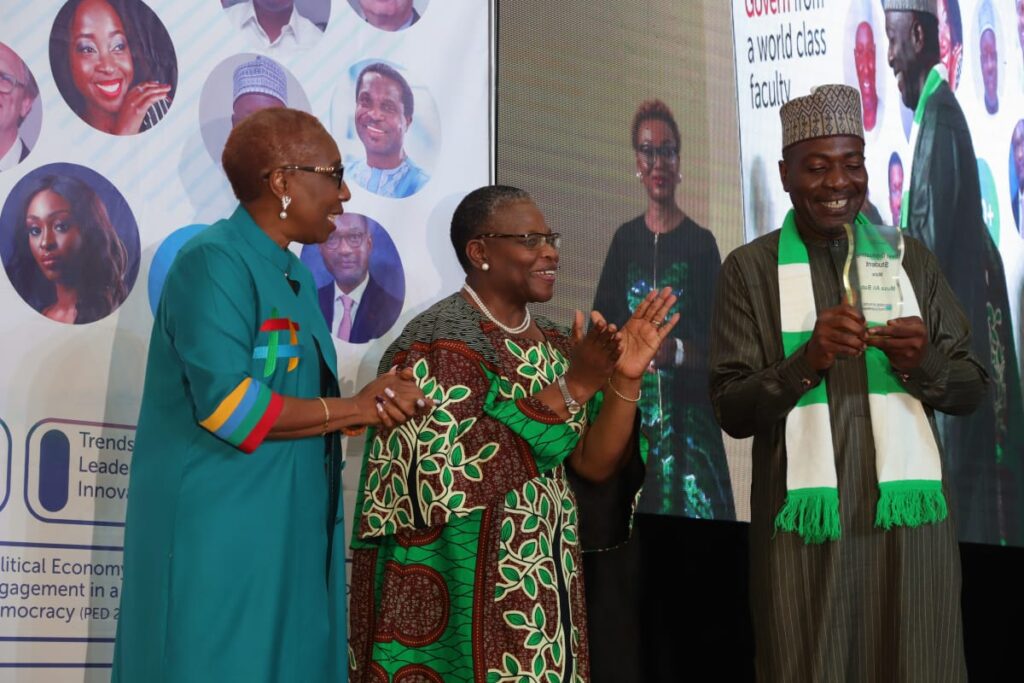
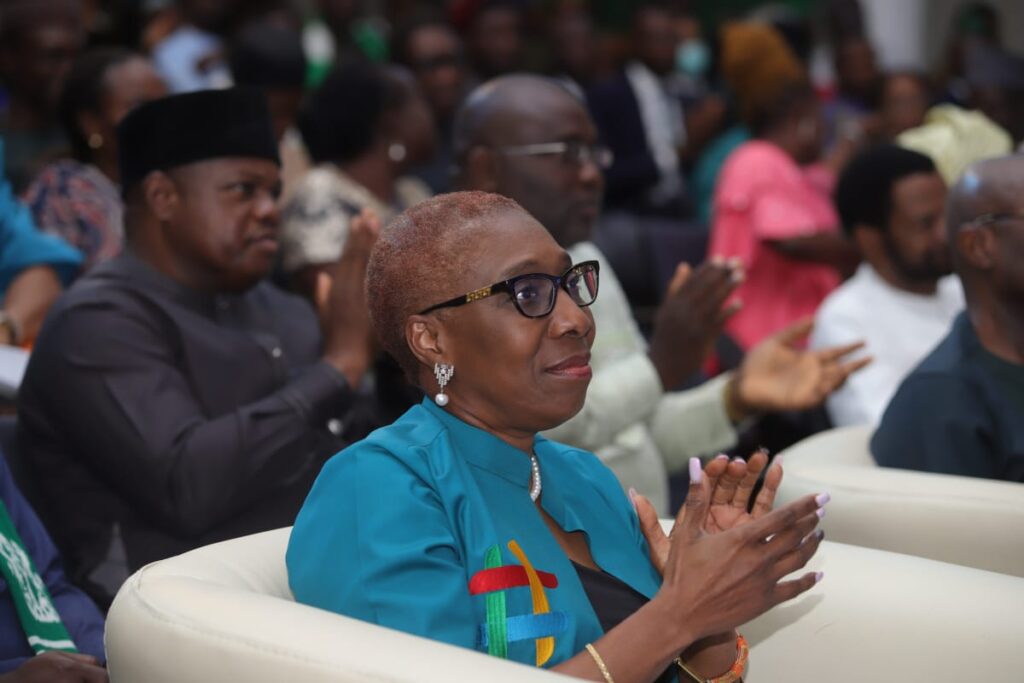
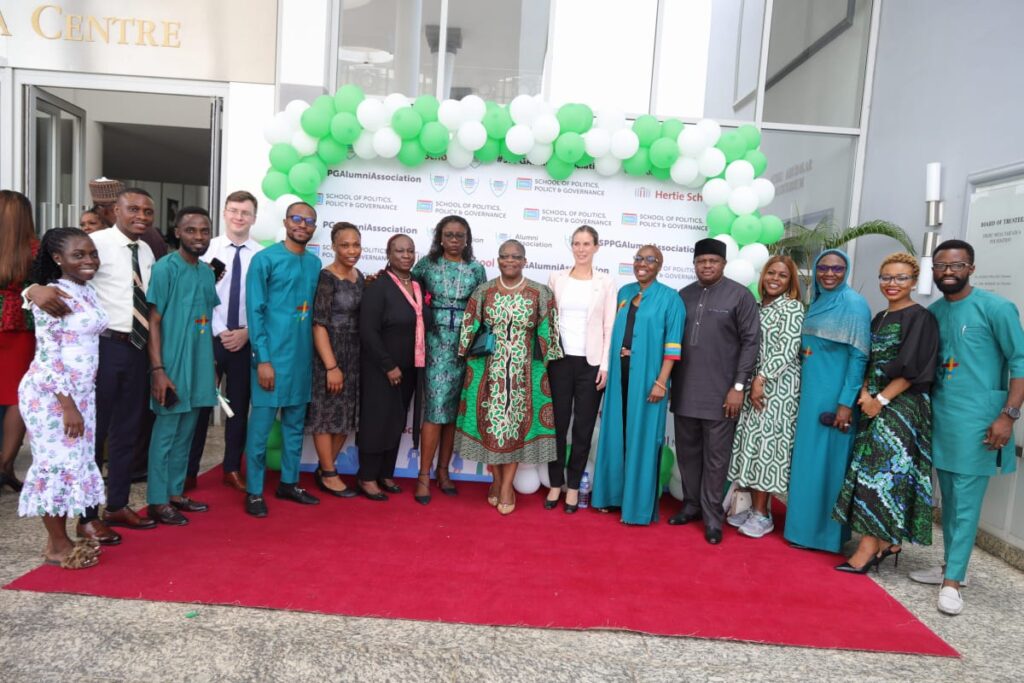
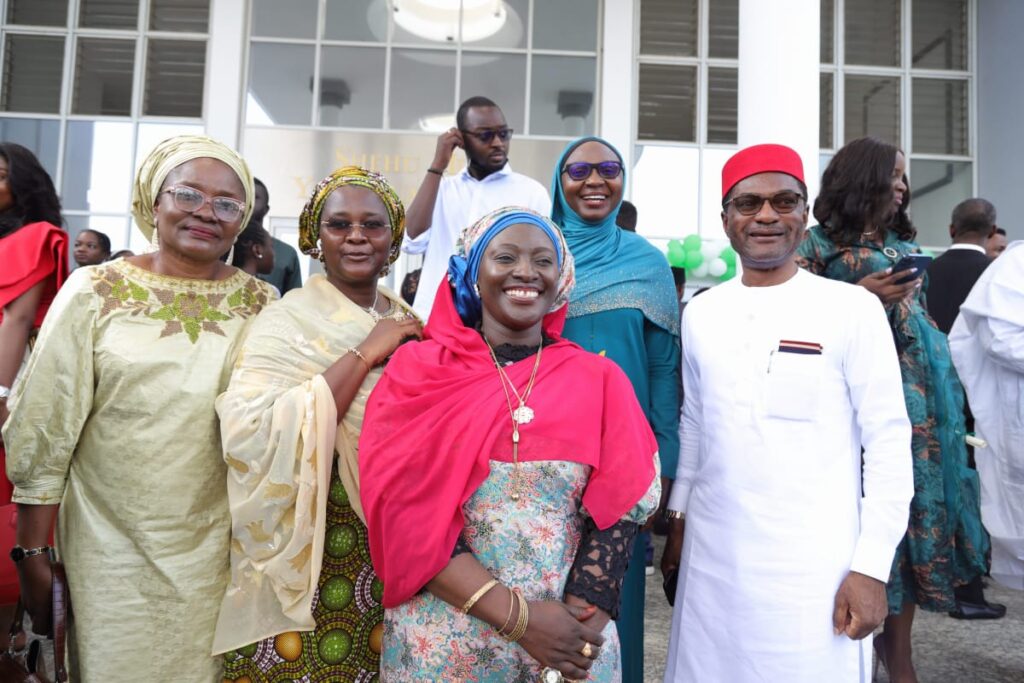
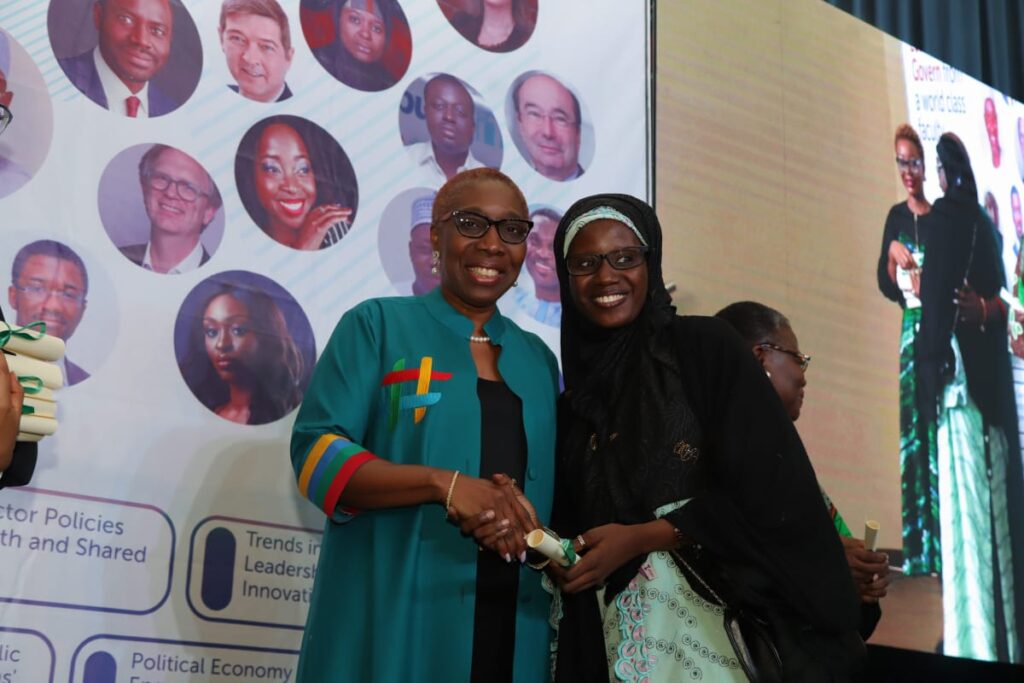
In a bid to produce the next generation leaders with disruptive thinking, School of Politics, Policy & Governance, (SPPG) over the weekend held a graduation ceremony for 133 students for the 2022 academic year in Abuja Nigeria.
At the 2022 graduation ceremony of the School of Politics, Policy, and Governance with the theme: “Designing Our Global Future with Africa in Mind” held at the Shehu Musa Yar’dua Centre, Abuja, were Chairman, FATE Foundation, Fola Adeola, former Minister of Information & Culture, Frank Nweke Jr., former Minister of Education/founder SPPG, Oby Ezekwesili, US Ambassador to Nigeria among others.
Speaking at the ceremony, Chief Executive Officer of SPPG, Alero Ayida-Otobo, said the institution was designed to transform the quality of political and public leadership in Nigeria and the rest of Africa.
She disclosed that the 2022 graduating class comprised 133 students who underwent 10 intensive months of training and learning.
“For the class of 2022, about 133 students are graduating. The pioneer class was 160, and they have gone through 10 intensive months of training and learning. They studied 140 topics and seven thematic areas. Research shows that there were certain gaps in the knowledge base of many public leaders. So, this is our own contribution to building the knowledge base of future leaders, and we are very pleased that we have 133 graduates.

“A lot of them are already doing great work. They are already community organisers serving at the community level and recruiting individuals that have the potential to be part of our community. Among them, we have at least 5 that scale through the primaries conducted by parties.
“Our 10 months course stretches and strengthens one’s leadership capacity, and our students who were aspirants demonstrate that what we are teaching is not just possible, but we have people running the race already”.
Meanwhile, former Minister of Education, Dr. Obiageli Ezekwesili, has linked the root cause of Nigeria’s leadership problem to distorted political culture where leaders place personal interests above the public good.
According to her, there must be a change of mindset by leaders to tackle the growing economy and security challenges in the country.
Ezekwesili, who is also the founder of SPPG, observed that character, competence and capacity was the missing link in producing good leaders in the African continent.
She, therefore, stressed the need for disruptive thinking in the nation’s political space.
She said: ” We found that not just in Nigeria, but across Africa, there is a distorted political culture.
It’s the political culture where those in public leadership subordinate the public good. That is the common good for their personal and narrow interests. And so, what it means is that the common good and public good is not served by people who should be serving. So, to correct that, you have to customize a new leadership mindset.
“So, the training that we gave at the School of Politics, policy and governance has the content to reset the mindset of those who wish to lead in public service.
“They lead by serving, they place character at the foundation of the knowledge that we give to them by improving on their competency and the capacity for them to be able to articulate sound policies, be able to design institutions that enable society to advance and to have the capacity to make the right choices of investment in the goods and services that countries need in order to grow”.
The ex-Vice President for the World Bank’s Africa Region, said ahead of the 2023 elections, such distorted political culture could be corrected with sufficient information on the part of the Nigerians.
According to Ezekwesili, there is a need to educate and sensitize the citizens on the consequences of making bad decisions during elections.
“I think that one of the things that our research shows is the important role of citizens, which is why a critical pillar in the research of fixed politics is the pillar on empowering and enlightening the electorate so that they would have enough influence sufficient enough to influence political outcomes. So, the role of the citizens in democracy is part of what the SPPG promotes and again, we must have the office of the citizen, the community organizing approach, and all the other things that lead towards an empowered citizen that can push back and demand accountability as well as the emergence of the right kind of leadership for our public space”, She added.
Former US Secretary of States, Hillary Clinton, in a short video message, stressed the need for Nigerians to vote during elections, noting that participating in electioneering activities would strengthen the nation’s democracy.
The best graduating students are Joyce Daniels- female and Musa Ali Baba- male.
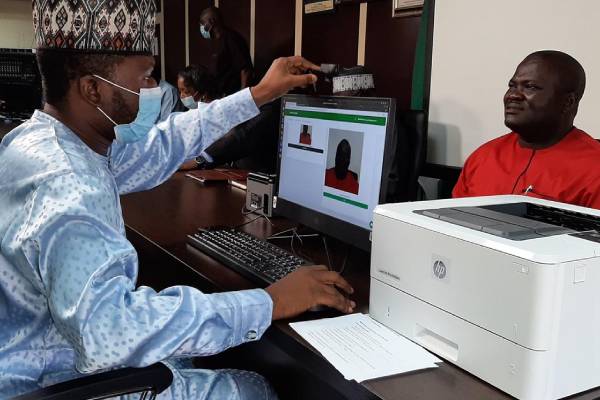
SPPG Group 7 launch the Perfect Seven Project to resolve voter apathy and increase citizen participation in the electoral process
SPPG Pioneer Class 2021 Group 7, for their SPPG Capstone project, launches the perfect seven projects to resolve voter apathy and increase citizen participation in the electoral process.
Since the return to electoral Democracy in 1999, elections in Nigeria have been characterised by voters’ apathy. Only a small percentage of eligible people vote. For instance, in 2019, the Independent National Electoral Commission’s record revealed 82.3 million registered voters nationwide; during the presidential election day, only 28.6 million (a mere 35%) voted. The elected President received his mandate for a second term on the strength of votes cast by a paltry 18.5% (15,191,847) votes.
Chechet Benjamin Andrew, Ojoshide Isabel Ugbaje, Okon Glory, Timkat Nanmak Peter, Collins Okeke, Aderemi Yusuf Adewale, Dele David Ogunsoto, Omotola Adeyoju Ilesanmi, Mary Uche Emmanuel-Okorie, Chiezugolum Ijeoma Odilinye, Gold Soni Ugochi and Ode Debra Achugwu, all members of SPPG Pioneer Class Group 7 for their capstone project, launched the perfect 7 Project to increase citizen participation in the electoral process.
This project is designed to change the depressing narrative of voter apathy and galvanise the Nigerian electorates to participate actively in large numbers in the electoral process. Not just to vote but also to hold elected candidates accountable for their stewardship.
According to Group 7, “The primary target group are people aged 18+. They are people within the eligible voters range, directly influencing the outcome of an election. If they do not make informed decisions or participate in the electoral process and governance, we can achieve little or no change. According to Worldometer (October 2021), Nigeria's population of about 211 million people, about 50% are, aged 18 and above. According to INEC, there were about 84 million registered users. However, elections do not reflect these numbers, as less than 20% voted in 2019. this figure has further fallen, as we’ve observed in state and local elections. Nigeria’s population is growing at a rate of 3.2% per annum. It is estimated that the population of Nigeria will be 402 million by 2050, of which the youths make up 60%. Therefore, we are also targeting teenagers who would be turning 18 in the next two election cycles.”
To achieve the goal of the project, the Group produced video skits in different Nigerian languages designed to create a mind reorientation and move Nigerian citizens from political apathy to participation.

Video 1 -> Politics is Life, Get your PVC -> https://youtu.be/9xpL67RL3zk

Video 2 -> Politics is Life, Get your PVC in Yoruba Language version 1 https://youtu.be/6Tm1AvflsFU
Video 3 -> Politics is Life, your PVC in Yoruba Language version Get 2 https://youtu.be/OCM1LdFG2nI
The Group distributed the productions across different media platforms.
The next phase of the project is to track the number of citizens who obtained their Personal Voter Card (PVC) and voted in an election as a result of our messages and to move Nigerians to imbibe, own and act on the Group's slogans: “Politics Is Life”, “Oro Oselu Se Koko”, “Politics Na Life.”
The Group hopes this becomes a life-long project that will go beyond group 7 of SPPG Pioneer Class. According to group 7, the issue of voter apathy and citizen participation will be solved through a marathon, not a sprint. The goal is to take measured and concrete steps that lead us to our goal, and we would evaluate the impact of each step and readjust our strategy.
They have plans to engage like-minded members from subsequent cohorts of the SPPG. These fresh, vibrant members, like fresh logs of wood, will spike the fire and keep it burning into eternity.

The Road to Good Governance in Nigeria & Africa: A Students’ Memoir of the SPPG Pioneer Cohort
SPPG Pioneer Class Group 12, Naija Pillars of Equity, for their SPPG capstone project, published a book: “The Road to Good Governance in Nigeria and Africa” A Students’ Memoir of the SPPG Pioneer Cohort.
The SPPG was formed amidst rightful discontent in the repeated cycles of bad governance seen across the African continent, particularly in Nigeria. The school enrolled its pioneer cohort of students on the 1st of March 2021 and began a mission to #FixPolitics in Nigeria and Africa.
For eight months, the SPPG Pioneer Cohort went through an extraordinary journey of understanding what it takes to fix politics. Through varied lectures, assignments, and group activities, students have been transformed by experiences that are no less than remarkable.
Patience Agbamu, Olaibi Noah Adebayo, Tauheed, Halimah Nene, Uchechukwu Dorothy Anagboso, Samuel Adebayo Adekeye, Ayobami Akinyode Olunloyo, Osanyin Taiwo Oreoluwa
Oluyinka Abiodun Oyeniji, Ikenna Ogbudimkpa, Ebi Juliet Ovie-Binitie, Kenneth Eneojo Uttih
Oyindamola Adenike Olugbile, Victor Uche Obioma, and Charles Ikenna O'Tudor, all members of SPPG Pioneer Class Group 12, Naija Pillars of Equity, agreed that for their SPPG capstone project, they would compile the individual “stories of fellow students and weave it together as a coherent amalgamation of students’ experiences, directly from the frontline of the SPPG journey, are the basis of their project.
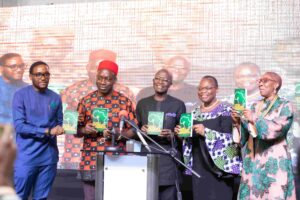
According to Group 12, “We believe that capturing this journey is necessary for a nation and a continent that need visibility of a new and positive future.” To this end, they published a book that captured various unique perspectives from members of the pioneer cohort of the SPPG.
The book was ideated through the lens of the School’s mission to educate present and future leaders dedicated to the good of the nation and ready to serve as stewards of the wellbeing of all Nigerians and its vision for a Nigeria with competent and responsible public Leadership firmly based on ethical principles and dedicated to serving the common good for the benefit of all.
The book captures how students' lives and thought patterns have significantly changed since joining the School of Politics, Policy and Governance. It is an interlinked compilation of individual SPPG experiences that challenge, excite, and encourage a new class of entrants into the school, but more aptly and ultimately into the political arena.
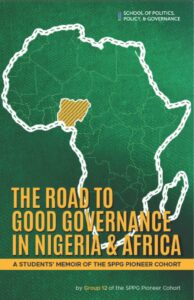
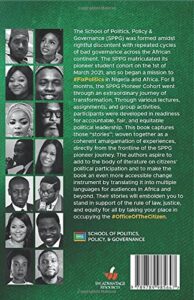
The book captures the values of accountability, respect and tolerance, stewardship and responsibility, social justice and inclusiveness, and ethical leadership (as a moral compass).
The book has been published on Amazon by members of Group12, while financial proceeds from its sales will be given back to the SPPG, with a percentage going to a charity of the school’s choosing.
The book was launched at the SPPG Pioneer Class graduation ceremony.
There are plans in the future to translate the book into French for audiences in Francophone Africa and promote the book within Nigeria and more widely across Africa and the diaspora.
According to the group, the lessons from the SPPG courses were instrumental in putting the chapters of this book together. Those who contributed to the book’s contents made references to several lectures and faculty members.